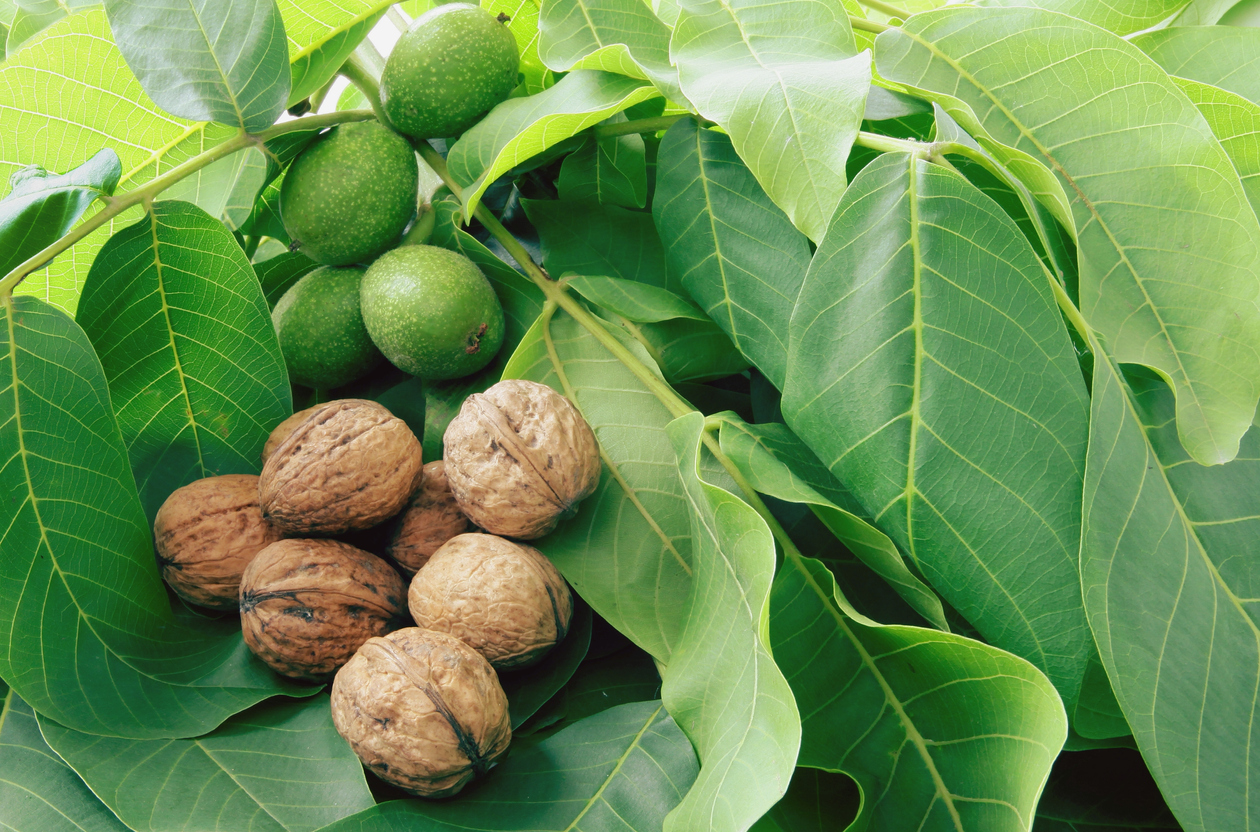
🌿 Walnut Tree
Walnussbaum
Juglans regia L.
The Walnut Tree (Juglans regia) is a deciduous tree belonging to the walnut family (Juglandaceae). Originally native to parts of Asia, it has been cultivated throughout Europe for centuries.
The tree can reach approximately 25 metres in height and live for more than 100 years. Its pinnate leaves release an aromatic scent when crushed. Male flowers appear in hanging catkins during spring, alongside smaller female flowers. The familiar walnuts mature in autumn.
Edible walnut kernels contain valuable unsaturated fatty acids, including alpha-linolenic acid, as well as protein, fibre and minerals. They form part of a balanced diet.
In traditional herbal medicine, the tannin-rich walnut leaves are particularly valued. Their astringent properties make them suitable for traditional external preparations used for minor skin complaints. Green fruit husks and immature walnuts also have a long history of use in folk medicine.
Notes
The parts used include mature and immature walnuts, leaves, green fruit husks and the woody internal partitions of the walnut shell.
Walnut leaves contain tannins, flavonoids and phenolic compounds. Green fruit husks contain juglone or its precursors and can strongly stain skin and fabrics.
Traditionally, walnut leaves are prepared as herbal infusions, washes, compresses or bath additives. Immature walnuts are also used to make liqueurs and preserved specialities.
The source additionally describes the use of internal walnut partitions for heart complaints. This should not be regarded as an established treatment. Cardiac arrhythmias require medical assessment.
People with a walnut allergy must avoid eating walnuts. Preparations made from green fruit husks and concentrated juglone-containing extracts should not be taken internally without appropriate safety assessment.
Effects
- vascular-supporting
- anti-inflammatory
- astringent
Conditions
- Corns
- psoriasis
- Cardiac arrhythmias
- skin inflammation
- eczema
- acne
Application Areas
- digestion
- cardiovascular system
- skin
Plant Parts
- Nut
- fruit
Preparations
- compress
- tincture
- tea
Contraindications
- allergy