🌿 Jerusalem Artichoke
Topinambur
Jerusalem Artichoke
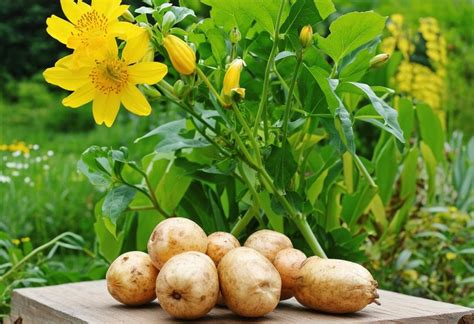
Jerusalem artichoke (Helianthus tuberosus L.) is a perennial plant belonging to the sunflower family (Asteraceae). Originally native to North America, it produces edible underground stem tubers. The plant is related to the sunflower and develops yellow flowers.
The tubers are particularly rich in inulin, a soluble dietary fibre fermented by bacteria in the large intestine. As a result, Jerusalem artichoke may support beneficial gut bacteria and contribute to dietary fibre intake.
Jerusalem artichoke is primarily consumed as a food. Its inulin content has also attracted research interest in prebiotic nutrition, digestion and metabolism. Its effectiveness as a treatment for diabetes or other medical conditions has not been sufficiently established in clinical studies.
Notes
The underground tubers are the principal plant parts used. Botanically, these are stem tubers rather than root tubers or bulbs.
Jerusalem artichoke can be eaten raw, boiled, steamed or roasted. Its inulin content may cause bloating, abdominal discomfort and a feeling of fullness, particularly when consumed in large portions. Starting with small amounts is therefore advisable.
People with sensitive digestion or irritable bowel syndrome may tolerate inulin-rich foods poorly. Caution is advised in individuals with allergies to plants of the sunflower family.
Effects
- supportive of healthy blood glucose
- rich in dietary fibre
Conditions
- intestinal health
Application Areas
- digestion
- gastrointestinal system
- digestive system
Plant Parts
- Tuber
Preparations
- raw
- roasted
- cooked
- steamed
Contraindications
- gastrointestinal sensitivity
- allergy or hypersensitivity to Asteraceae