🌿 Mezereon
Seidelbast
Daphne mezereum L.
Mezereon (Daphne mezereum L.) is a deciduous, highly poisonous shrub belonging to the Thymelaeaceae family. It occurs across large parts of Europe and Asia, typically growing in deciduous and mixed woodland on nutrient-rich soils.
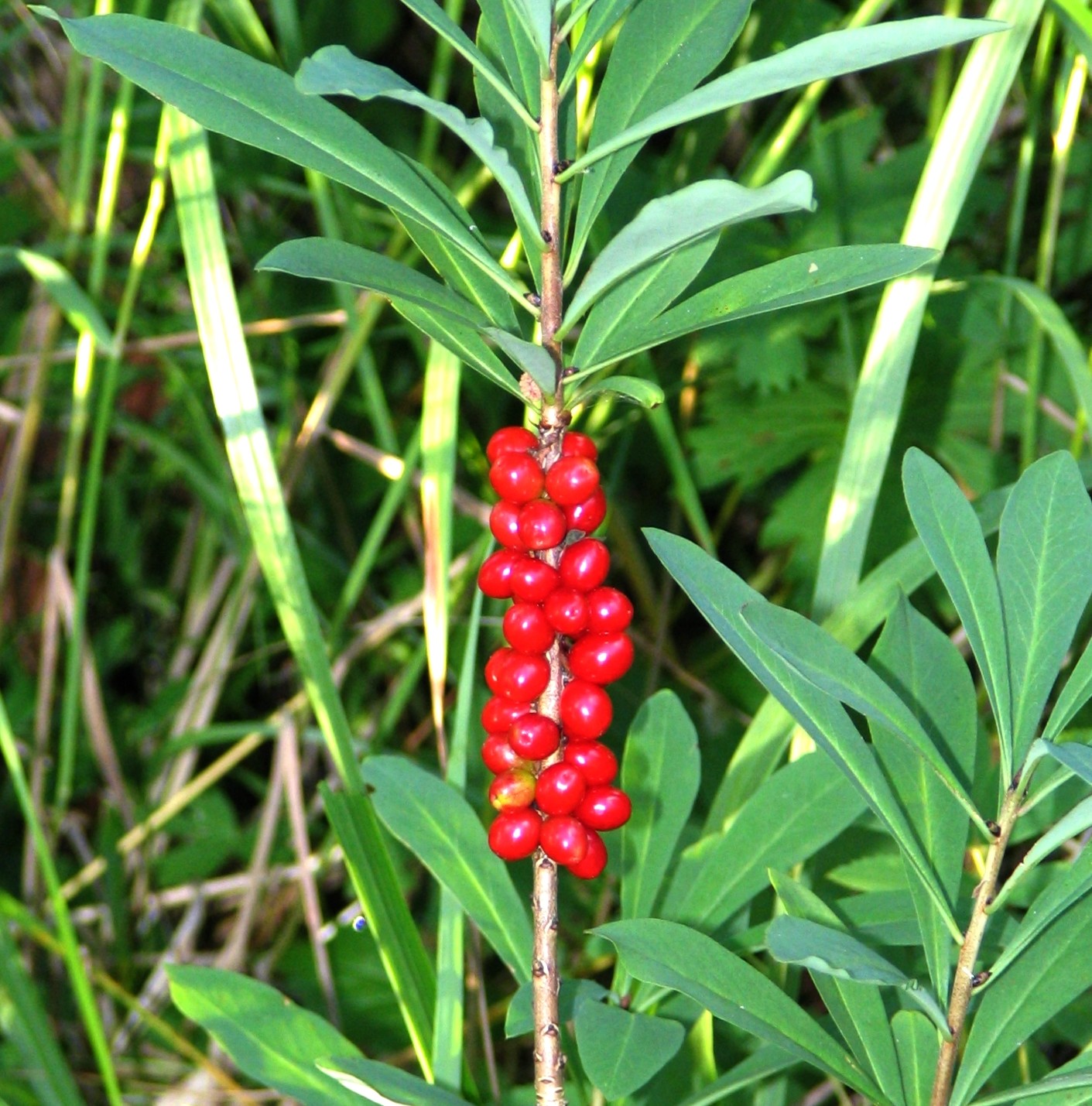
The plant usually reaches a height of 30 to 150 centimetres. Its striking pink to purple, strongly fragrant flowers appear in early spring, often before the leaves emerge. Bright red, berry-like drupes develop later in the year.
All parts of the plant are poisonous, particularly the bark, seeds and fruits. Its toxic constituents include daphnetoxin and mezerein, which can cause severe irritation and poisoning.
Historically, mezereon was used externally in folk medicine as a powerful skin irritant. It is also mentioned in homeopathic literature. These traditional applications do not establish medical effectiveness.
Notes
WARNING: HIGHLY POISONOUS PLANT.
All parts of mezereon contain toxic compounds. The bright red fruits are particularly hazardous because children may mistake them for edible berries.
Poisoning may cause severe irritation of the mouth and throat, burning sensations, vomiting, diarrhoea and serious systemic symptoms. If ingestion is suspected, immediate medical advice or poison control assistance is required. Do not induce vomiting.
Contact with the plant's sap or bark may also cause significant skin irritation, inflammation and blistering.
Historical sources describe uses for neuralgia, skin complaints, bladder spasms and neck pain. Homeopathic literature also mentions mezereon for skin and nerve-related pain.
Effects
- skin-irritating
- diuretic
Conditions
- Urge to sneeze
- constipation
- trigeminal neuralgia
- runny nose
- back pain
- atopic dermatitis
- neuralgia
- Neck pain
- migraine
- stomach pain
- gastritis
- stomach ulcer
- headaches
- colic
- Skin scaling
- skin itching
- Burning urination
- shingles
- Joint stiffness
- joint pain
- gastritis
- eczema
- Numbness in the feet
- pressure ulcers
- bloating
- Bladder spasms
Application Areas
- nervous system
- skin
- bladder
Plant Parts
- bark
Preparations
- tincture
Contraindications
- breastfeeding
- pregnancy
- avoid contact with mucous membranes and the eyes
- Highly poisonous plant – not suitable for internal or external self-medication
- irritated mucous membranes
- allergy