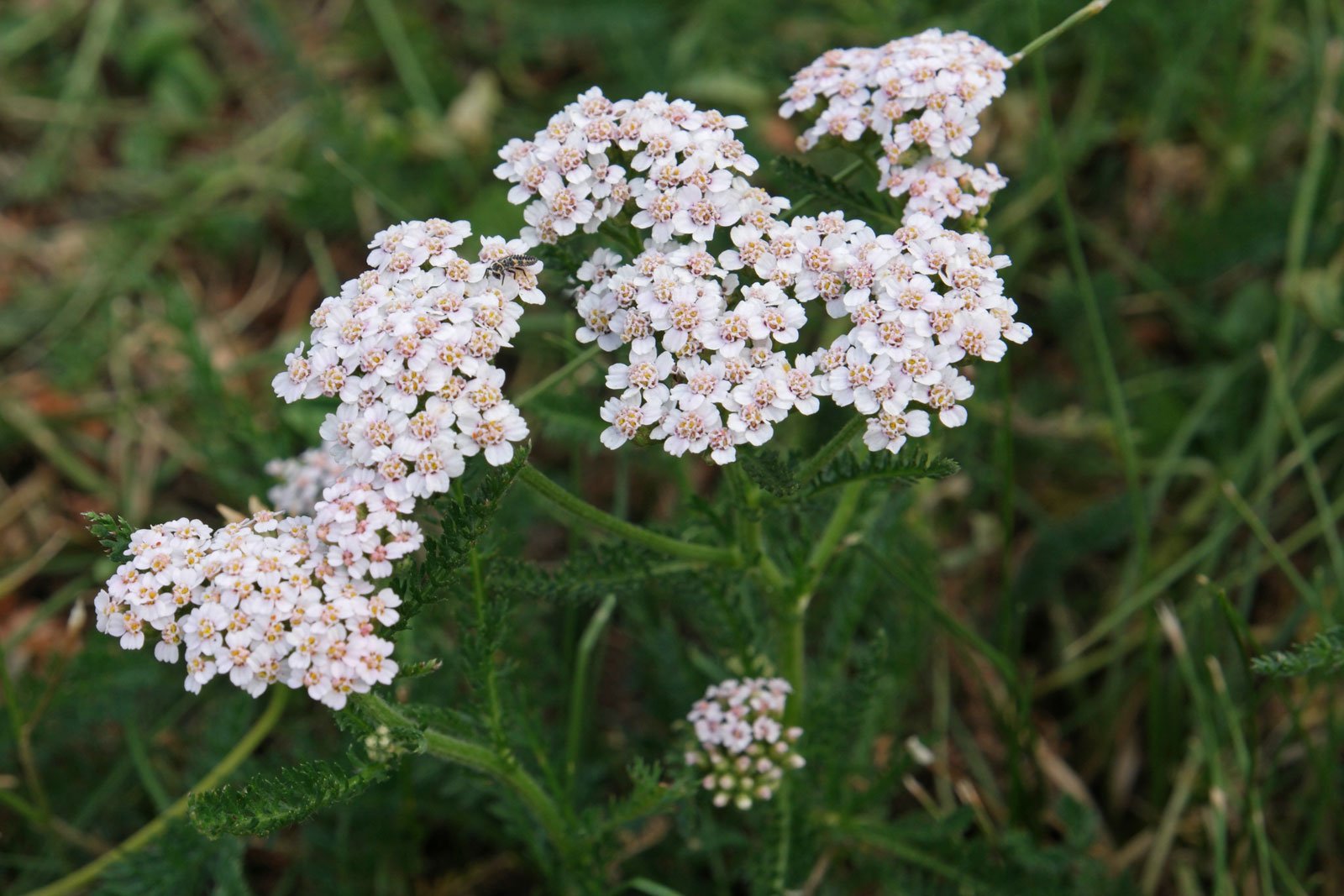
🌿 Yarrow
Schafgarbe
Achillea millefolium
Yarrow is a traditional medicinal herb with a broad range of uses. It contains essential oil, flavonoids, phenolic acids, tannins and sesquiterpenes. It has traditionally been used for digestive complaints, bloating, loss of appetite, spasmodic discomfort and menstrual cramps, as well as externally for minor wounds. Research indicates anti-inflammatory, antioxidant, antispasmodic and antimicrobial properties.
Notes
Yarrow is traditionally recognised for temporary loss of appetite, mild digestive complaints, bloating, menstrual cramps and minor superficial wounds. These uses are based mainly on long-standing traditional use, while robust clinical evidence remains limited.
Sensitive individuals may develop allergic skin reactions. Yarrow should be avoided in people with hypersensitivity to yarrow or other Asteraceae plants. Use during pregnancy and breastfeeding is not recommended because of insufficient safety data.
Sensitive individuals may develop allergic skin reactions. Yarrow should be avoided in people with hypersensitivity to yarrow or other Asteraceae plants. Use during pregnancy and breastfeeding is not recommended because of insufficient safety data.
Effects
- wound-healing-supportive
- digestive
- antispasmodic
- vascular-supporting
- choleretic
- anti-inflammatory
- haemostatic
- appetite-stimulating
- antimicrobial
- antibacterial
Conditions
- digestive complaints
- menstrual complaints
- varicose veins
- headaches
- skin problems
- inflammatory processes
- circulatory disorders
- bloating
- abdominal cramps
- loss of appetite
Application Areas
- wound care
- female reproductive system
- digestion
- gastrointestinal system
- skin
- biliary system
- blood vessels
Plant Parts
- stems
- herb
- florets
- flower
- leaf
Preparations
- oil
- topical cream
- topical oil
- compress
- tincture
- tea
- powder
- dried
- cooked
- freshly pressed juice
- extract
- infusion
Contraindications
- breastfeeding
- pregnancy
- allergy or hypersensitivity to Asteraceae