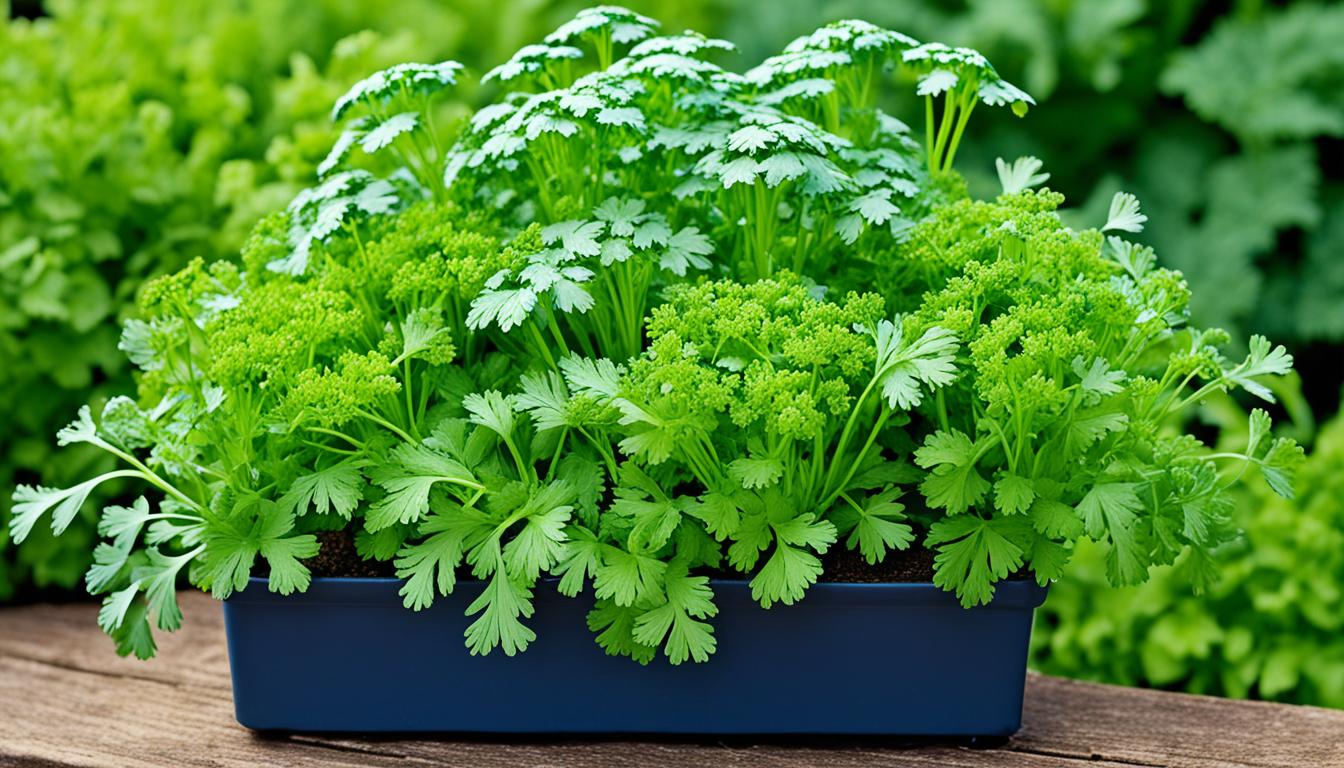
🌿 Parsley
Petersilie
Petroselinum crispum
Parsley is a nutrient-rich culinary and medicinal herb. It provides vitamin C, vitamin K, carotenoids, flavonoids and minerals. Traditionally, it has mainly been used to support digestion, the liver and urinary tract and to promote urine production. Modern research indicates antioxidant, anti-inflammatory, liver- and kidney-supportive and blood glucose- and blood pressure-regulating properties.
Notes
Parsley is generally well suited as a food when consumed in normal culinary amounts. Concentrated seed preparations and essential oil require greater caution because they contain considerably higher amounts of apiol and myristicin.
During pregnancy, large amounts, particularly parsley seeds and essential oil, should be avoided. Caution is also advisable in severe kidney disease or when following a potassium-restricted diet because parsley is rich in potassium.
During pregnancy, large amounts, particularly parsley seeds and essential oil, should be avoided. Caution is also advisable in severe kidney disease or when following a potassium-restricted diet because parsley is rich in potassium.
Effects
- nutrient-rich
- antispasmodic
- diuretic
- vascular-supporting
- anti-inflammatory
- supportive of healthy blood glucose
- supportive of healthy blood pressure
- antioxidant
- antibacterial
Conditions
- cellular protection
- digestive complaints
- kidney and bladder stones
- urinary tract complaints
- elevated blood glucose
- inflammatory processes
- intestinal health
- high blood pressure
Application Areas
- digestion
- metabolism
- liver and natural detoxification processes
- cardiovascular system
- urinary tract
- digestive system
Plant Parts
- root
- seeds
- fruit
- leaf
Preparations
- tea
- raw
- powder
- dried
- freshly pressed juice
- extract
- infusion
Contraindications
- kidney disease
- pregnancy
- allergy or hypersensitivity to Apiaceae