🌿 Moringa
Moringa
Moringa oleifera Lam.
Moringa oleifera is a fast-growing, drought-tolerant tree native to northern India and neighbouring parts of Pakistan. It is now cultivated throughout many tropical and subtropical regions.
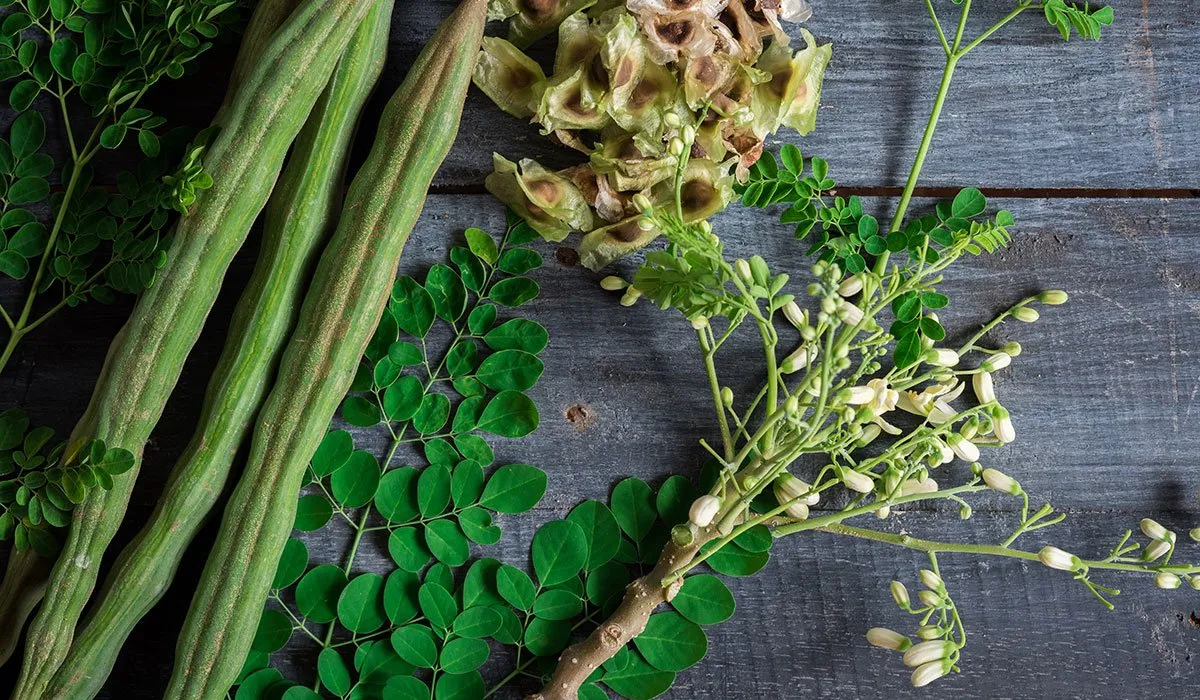
Almost all parts of the plant have traditional uses. The leaves are particularly valued as a nutrient-rich vegetable or can be dried and made into powder. Young fruits („drumsticks“) are eaten as a vegetable, while the seeds provide oil and have also traditionally been used for water purification.
Almost all parts of the plant have traditional uses. The leaves are particularly valued as a nutrient-rich vegetable or can be dried and made into powder. Young fruits („drumsticks“) are eaten as a vegetable, while the seeds provide oil and have also traditionally been used for water purification.
Notes
Moringa leaves are rich in protein, dietary fibre, carotenoids, vitamins and minerals and may help supplement a nutrient-poor diet. Antioxidant, anti-inflammatory, blood-glucose and lipid-regulating properties are also being investigated, although clinical evidence for therapeutic effects remains limited.
Moringa contains numerous phytochemicals, including flavonoids, carotenoids and isothiocyanates. These compounds are particularly being studied for their antioxidant and inflammation-related properties.
Moringa can be used fresh as a vegetable, dried, ground or as a powder. The leaves can be added to salads, soups, sauces and vegetable dishes. Young fruits are cooked as vegetables, while the seeds can be used to produce Moringa oil.
Traditional use of the roots and bark should be distinguished from the use of the leaves as food. Evidence for medicinal use of these plant parts is considerably weaker.
Moringa contains numerous phytochemicals, including flavonoids, carotenoids and isothiocyanates. These compounds are particularly being studied for their antioxidant and inflammation-related properties.
Moringa can be used fresh as a vegetable, dried, ground or as a powder. The leaves can be added to salads, soups, sauces and vegetable dishes. Young fruits are cooked as vegetables, while the seeds can be used to produce Moringa oil.
Traditional use of the roots and bark should be distinguished from the use of the leaves as food. Evidence for medicinal use of these plant parts is considerably weaker.
Effects
- digestive
- nutrient-rich
- strengthening
- vascular-supporting
- anti-inflammatory
- supportive of healthy blood glucose
- lipid-regulating
- rich in dietary fibre
- antioxidant
Conditions
- cellular protection
- digestive complaints
- cancer prevention
- impaired immune function
- fatigue
- elevated blood glucose
- elevated blood lipids
- inflammatory processes
- type 2 diabetes
Application Areas
- cells
- metabolism
- immune system
- cardiovascular system
- lipid metabolism
- digestive system
- blood glucose regulation
Plant Parts
- root
- stems
- seeds
- bark
- fruit
- flower
- leaf
Preparations
- oil
- tea
- raw
- powder
- ground
- cooked
- extract
- blanched
- decoction
Contraindications
- pregnancy
- in people taking medication for diabetes or blood pressure, possible effects on glucose or blood pressure should be considered