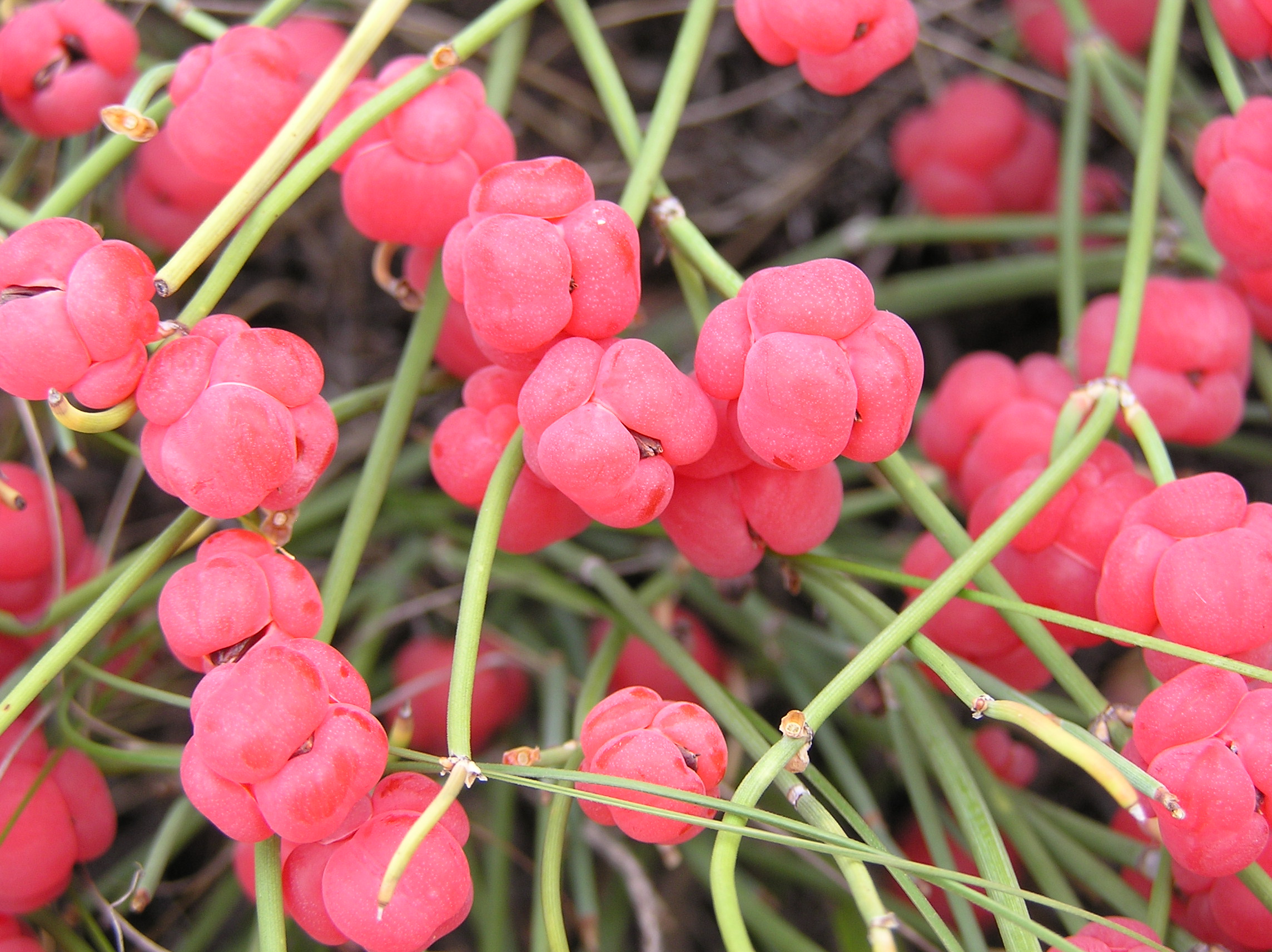
🌿 Chinese Ephedra, Joint Pine
Meerträubel
Ephedra
Ephedra is a genus of predominantly shrubby plants belonging to the Ephedraceae family. These plants grow mainly in dry, sunny regions of Asia, Europe and other parts of the world.
They are characterised by slender, green, jointed stems and greatly reduced, scale-like leaves. Photosynthesis takes place primarily in the green shoots.
Certain Ephedra species contain pharmacologically active alkaloids, particularly ephedrine and pseudoephedrine. Other reported constituents include flavonoids, catechins and phenolic acids. Chemical composition varies considerably between species.
In traditional Chinese medicine, certain Ephedra species are used under the name Ma Huang, particularly for respiratory complaints. Their alkaloids can stimulate the sympathetic nervous system, dilate the bronchi and increase blood pressure and heart rate.
Notes
Ephedra is a medicinal plant genus associated with significant health risks. Species containing ephedrine may cause palpitations, high blood pressure, cardiac arrhythmias, agitation and insomnia. Serious cardiovascular and neurological complications are possible.
Historically, ephedrine-containing preparations were used for asthma, coughs, hay fever and other respiratory complaints. Ephedrine has established pharmacological effects, but this does not mean that herbal Ephedra preparations are safe or suitable for self-medication.
Particular risks apply to individuals with cardiovascular disease, hypertension or hyperthyroidism, and those taking stimulant medications. Use during pregnancy and breastfeeding should be avoided.
Effects
- central nervous system-stimulating
- warming
- diaphoretic
- circulation-stimulating
- cough-relieving
- cough-suppressing
- diuretic
- vasoconstrictive
- bronchodilating
- blood-pressure-raising
- appetite-suppressing
- antiviral
- stimulating
Conditions
- Graves' disease
- hay fever
- asthma
Application Areas
- respiratory system
Plant Parts
- Shoots
Preparations
- tincture
- tea
- powder
- extract
Contraindications
- interactions with certain medicines
- breastfeeding
- pregnancy
- cardiac arrhythmias