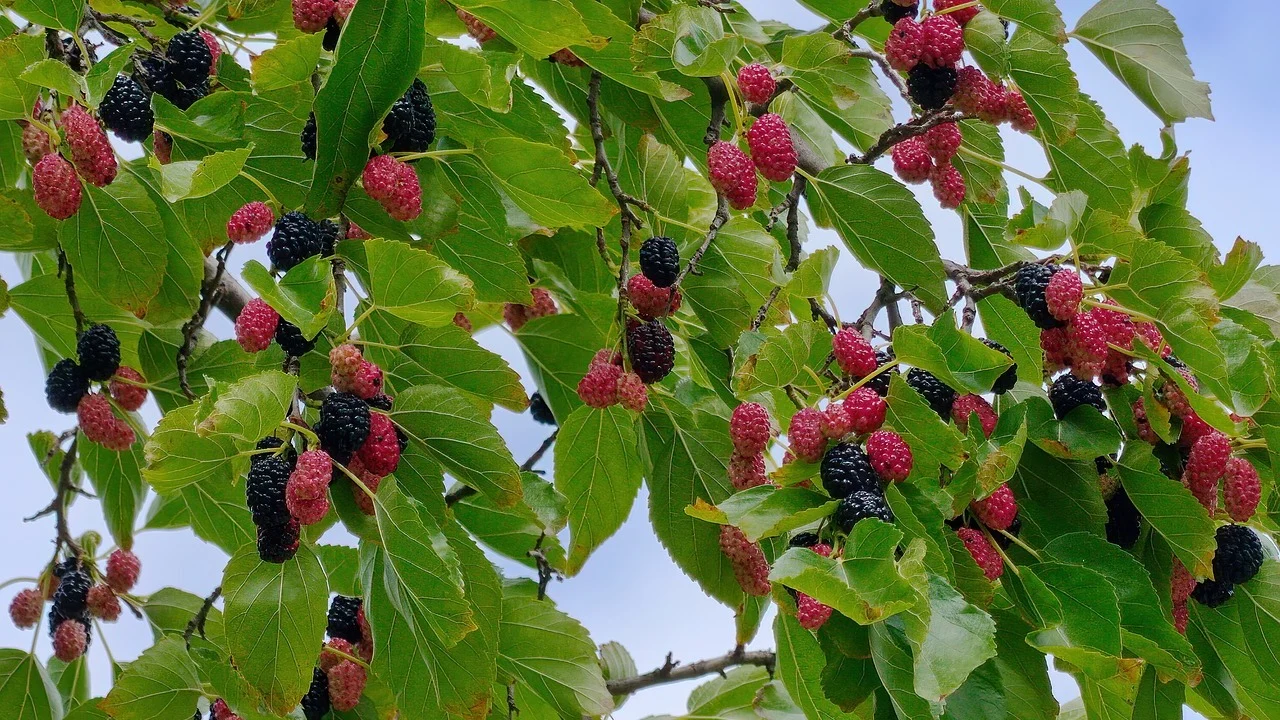
🌿 Mulberry Leaves
Maulbeerblätter
Morus alba L.
Mulberry leaves are traditionally used particularly in Traditional Chinese Medicine and other Asian healing traditions. They are also consumed as food and used to prepare herbal tea. The leaves contain numerous bioactive compounds, including flavonoids, phenolic acids, polysaccharides and especially 1-deoxynojirimycin (DNJ). DNJ can inhibit the enzymes α-glucosidase and α-amylase and may therefore influence carbohydrate digestion and the rise in blood glucose after meals.
Their potential effects on blood glucose regulation and glucose metabolism are particularly interesting. Clinical studies and systematic reviews indicate that mulberry leaves or mulberry leaf extracts may reduce postprandial blood glucose. A meta-analysis of 12 clinical trials involving 615 participants also found improvements in fasting blood glucose, HbA1c and fasting insulin. However, the authors emphasised that further high-quality studies are needed.
Antioxidant, anti-inflammatory, lipid-regulating, weight-management and cardioprotective properties are also being investigated. There is promising evidence concerning cholesterol and other cardiometabolic risk factors, although the clinical evidence is not yet conclusive.
Traditionally, mulberry leaves have been used for elevated blood sugar, cough, fever and various inflammatory complaints. In Asian countries, the leaves are also widely consumed as tea and as a functional food.
Their potential effects on blood glucose regulation and glucose metabolism are particularly interesting. Clinical studies and systematic reviews indicate that mulberry leaves or mulberry leaf extracts may reduce postprandial blood glucose. A meta-analysis of 12 clinical trials involving 615 participants also found improvements in fasting blood glucose, HbA1c and fasting insulin. However, the authors emphasised that further high-quality studies are needed.
Antioxidant, anti-inflammatory, lipid-regulating, weight-management and cardioprotective properties are also being investigated. There is promising evidence concerning cholesterol and other cardiometabolic risk factors, although the clinical evidence is not yet conclusive.
Traditionally, mulberry leaves have been used for elevated blood sugar, cough, fever and various inflammatory complaints. In Asian countries, the leaves are also widely consumed as tea and as a functional food.
Notes
Mulberry leaves are generally well established as a traditional food and tea ingredient, particularly in Asia. Current scientific interest focuses strongly on their potential to support blood glucose control, especially after carbohydrate-containing meals. The effect may vary considerably depending on the species, harvesting conditions, preparation and DNJ content.
Caution is advisable when mulberry leaves or concentrated extracts are used together with blood-glucose-lowering medication, as an additional reduction in blood glucose may occur. People with diabetes should therefore not use mulberry preparations as a substitute for prescribed treatment.
Research into cancer, obesity, cardiovascular disease and other conditions includes numerous laboratory and animal studies as well as some clinical investigations.
Caution is advisable when mulberry leaves or concentrated extracts are used together with blood-glucose-lowering medication, as an additional reduction in blood glucose may occur. People with diabetes should therefore not use mulberry preparations as a substitute for prescribed treatment.
Research into cancer, obesity, cardiovascular disease and other conditions includes numerous laboratory and animal studies as well as some clinical investigations.
Effects
- weight-regulating
- cardioprotective
- vascular-supporting
- anti-inflammatory
- cholesterol-lowering
- supportive of healthy blood glucose
- lipid-regulating
- antioxidant
- antimicrobial
Conditions
- metabolic disorders
- overweight
- oxidative stress
- cardiovascular system
- elevated cholesterol levels
- elevated blood glucose
- elevated blood lipids
- inflammatory processes
- type 2 diabetes
Application Areas
- cells
- digestion
- metabolism
- liver and natural detoxification processes
- cardiovascular system
- blood vessels
- blood glucose regulation
Plant Parts
- leaf
Preparations
- tea
- raw
- powder
- extract
- infusion
Contraindications
- tendency towards hypoglycaemia
- breastfeeding
- pregnancy
- in people taking medication for diabetes or blood pressure, possible effects on glucose or blood pressure should be considered
- allergy