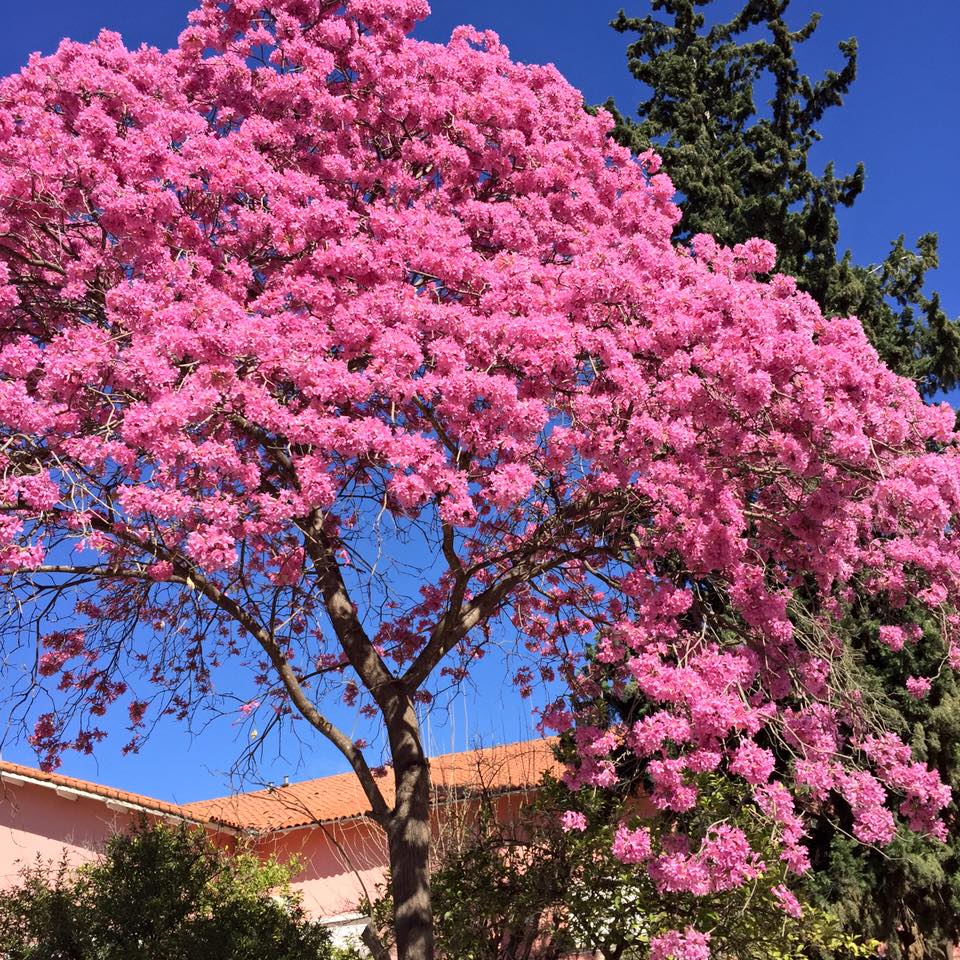
🌿 Pau d’Arco
Lapacho
Handroanthus impetiginosus
Lapacho is a tropical South American tree whose inner bark has traditionally been prepared as a tea. The tree is native mainly to tropical regions of Central and South America. In traditional herbal medicine, lapacho has been used for infections, fever, digestive complaints, skin problems and inflammatory conditions.
The bark contains mainly naphthoquinones, including lapachol and β-lapachone, as well as phenolic compounds, flavonoids and other secondary plant constituents. Experimental studies have demonstrated antibacterial, antifungal, anti-inflammatory and antiproliferative properties. The potential anticancer effects of lapachol and β-lapachone have been extensively investigated.
The bark contains mainly naphthoquinones, including lapachol and β-lapachone, as well as phenolic compounds, flavonoids and other secondary plant constituents. Experimental studies have demonstrated antibacterial, antifungal, anti-inflammatory and antiproliferative properties. The potential anticancer effects of lapachol and β-lapachone have been extensively investigated.
Notes
Lapacho is particularly interesting for its antimicrobial and anti-inflammatory properties. Laboratory and animal studies have also demonstrated several effects on cancer cells. However, these findings should not be interpreted as proof of anticancer efficacy in humans.
Preliminary clinical evidence suggests that a lapacho-based preparation may help prevent or reduce oral mucositis during radiotherapy. Early findings have also suggested potential benefits for primary dysmenorrhoea, although further research is required.
Preliminary clinical evidence suggests that a lapacho-based preparation may help prevent or reduce oral mucositis during radiotherapy. Early findings have also suggested potential benefits for primary dysmenorrhoea, although further research is required.
Effects
- psoriasis
- pain-relieving
- studied for cancer prevention
- immunomodulatory
- anti-inflammatory
- anticoagulant
- antipsoriatic
- antioxidant
- antifungal
- antimicrobial
- antibacterial
Conditions
- digestive complaints
- fungal infections
- menstrual complaints
- stomach complaints
- cancer prevention
- skin problems
- fever
- inflammatory processes
- eczema
- bacterial infections
Application Areas
- cells
- female reproductive system
- digestion
- oral mucositis during radiotherapy
- immune system
- skin
- blood coagulation
Plant Parts
- bark
Preparations
- tea
- powder
- dried
- extract
- infusion
- decoction
Contraindications
- concomitant use of anticoagulants
- breastfeeding
- pregnancy
- increased bleeding tendency
- anaemia