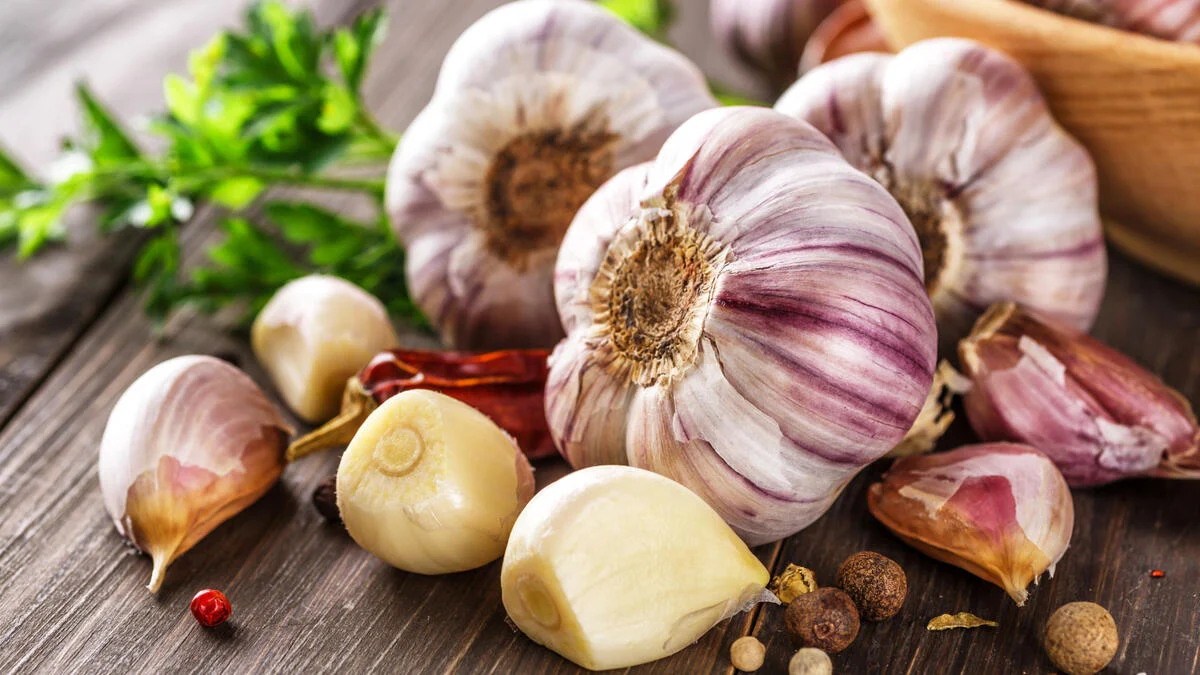
🌿 Garlic
Knoblauch
Allium sativum L.
Garlic is a bulb-forming plant that has been used as both food and medicinal herb for thousands of years. Its characteristic compounds are sulphur-containing constituents including alliin, allicin, ajoene, diallyl disulfide and diallyl trisulfide. Allicin is mainly formed when a garlic clove is crushed or cut, through the action of the enzyme alliinase. Garlic also contains flavonoids and selenium.
Traditionally, garlic has mainly been used for colds, respiratory complaints, digestive problems and cardiovascular support. Research indicates antioxidant, antimicrobial and anti-inflammatory properties, as well as potential blood-pressure and blood-lipid supporting effects. The European Medicines Agency recognises garlic as a herbal medicinal product in the areas of cough and cold and circulatory disorders.
Traditionally, garlic has mainly been used for colds, respiratory complaints, digestive problems and cardiovascular support. Research indicates antioxidant, antimicrobial and anti-inflammatory properties, as well as potential blood-pressure and blood-lipid supporting effects. The European Medicines Agency recognises garlic as a herbal medicinal product in the areas of cough and cold and circulatory disorders.
Notes
Garlic is generally well suited as a food when consumed in normal culinary amounts. Its strongest pharmacological effects are mainly associated with its sulphur-containing compounds. Fresh garlic, dried garlic, garlic powder, extracts and aged preparations can differ considerably in their chemical composition.
Garlic may be particularly relevant for cardiovascular support. Research describes potential blood-pressure-lowering, lipid-lowering, antioxidant and anti-atherosclerotic effects, although the strength of evidence varies according to the preparation and indication.
Garlic may be particularly relevant for cardiovascular support. Research describes potential blood-pressure-lowering, lipid-lowering, antioxidant and anti-atherosclerotic effects, although the strength of evidence varies according to the preparation and indication.
Effects
- antibacterial
- antiparasitic
- antiviral
- supportive of healthy blood pressure
- lipid-regulating
- cholesterol-lowering
- circulation-promoting
- immunomodulatory
- hepatoprotective
- antifungal
- digestive
Conditions
- atherosclerotic processes
- respiratory complaints
- bacterial infections
- bloating
- high blood pressure
- intestinal health
- type 2 diabetes
- circulatory disorders
- inflammatory processes
- elevated blood lipids
- elevated cholesterol levels
- common cold
- cardiovascular system
- parasitic infections
- fungal infections
- cellular protection
Application Areas
- blood vessels
- digestive system
- cardiovascular system
- immune system
- liver and natural detoxification processes
- metabolism
- digestion
- cells
Plant Parts
- leaf
- flower
- bulbils
- bulb
Preparations
- infusion
- extract
- dried
- powder
- raw
- tea
Contraindications
- caution when taking anticoagulants, particularly warfarin
- increased bleeding tendency
- concomitant use of aspirin
- gastrointestinal sensitivity
- pregnancy
- breastfeeding