🌿 Carrot
Karotte
Daucus carota subsp. sativus
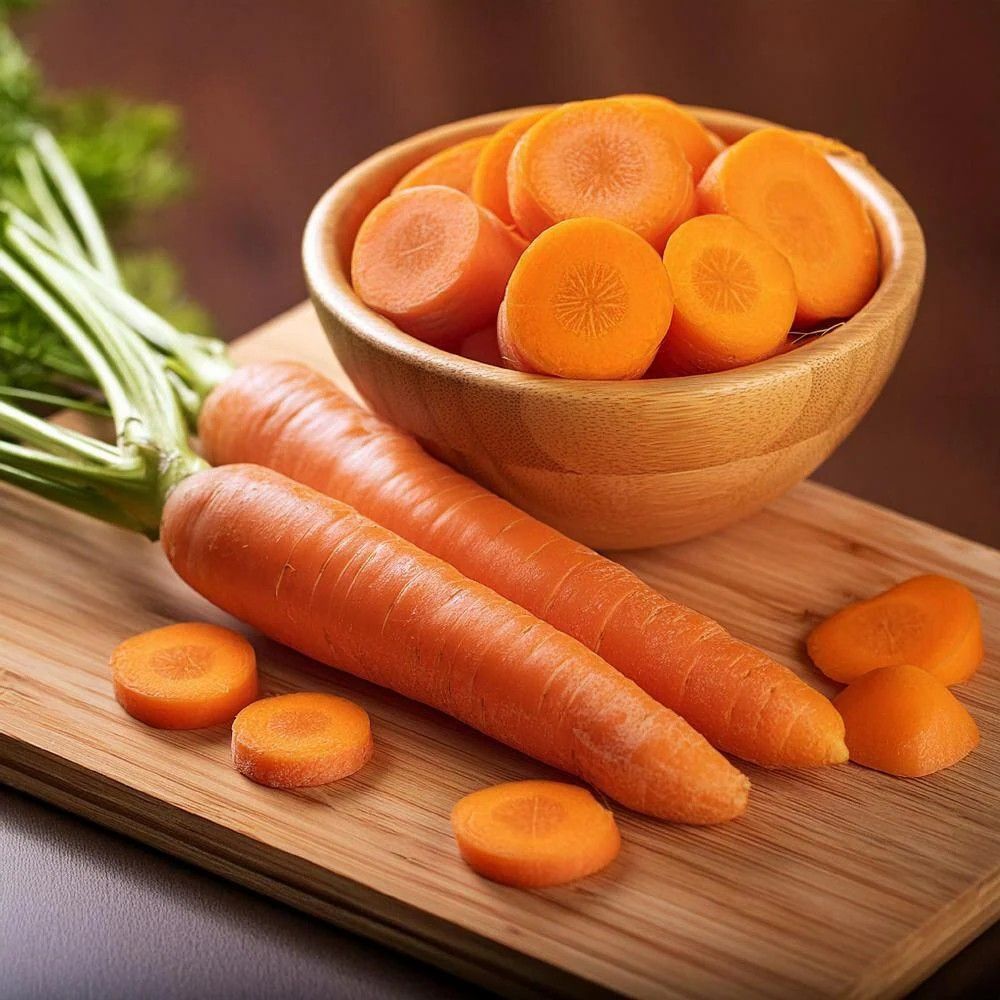
Carrots are nutrient-rich root vegetables and are particularly high in beta-carotene, which the body can convert into vitamin A. Vitamin A contributes to the maintenance of normal vision, skin and mucous membranes and supports normal immune function. Carrots also contain dietary fibre, various carotenoids and natural plant compounds such as falcarinol and falcaridiol. They can be eaten both raw and cooked.
Notes
Carrots are particularly rich in beta-carotene, a precursor of vitamin A. Beta-carotene absorption can be improved by gentle cooking and consuming carrots together with some fat. Raw carrots, however, retain sensitive plant compounds such as falcarinol and falcaridiol. Carrots can therefore be beneficial both raw and gently cooked. To better preserve falcarinol, the underlying study suggests cooking carrots whole and cutting them afterwards. High-dose beta-carotene supplements are not recommended, particularly for smokers and former smokers; this does not apply to normal dietary consumption of carrots.
Effects
- nutrient-rich
- studied for cancer prevention
- vascular-supporting
- anti-inflammatory
- supportive of healthy blood glucose
- rich in dietary fibre
- antioxidant
Conditions
- cellular protection
- oxidative stress
- elevated blood glucose
- elevated blood lipids
- intestinal health
- eye conditions
Application Areas
- cells
- digestion
- metabolism
- immune system
- cardiovascular system
- skin
- digestive system
- eyes
Plant Parts
- root
- seeds
Preparations
- steamed
- raw
- dried
- ground
- cooked
- freshly pressed juice
Contraindications
- allergy