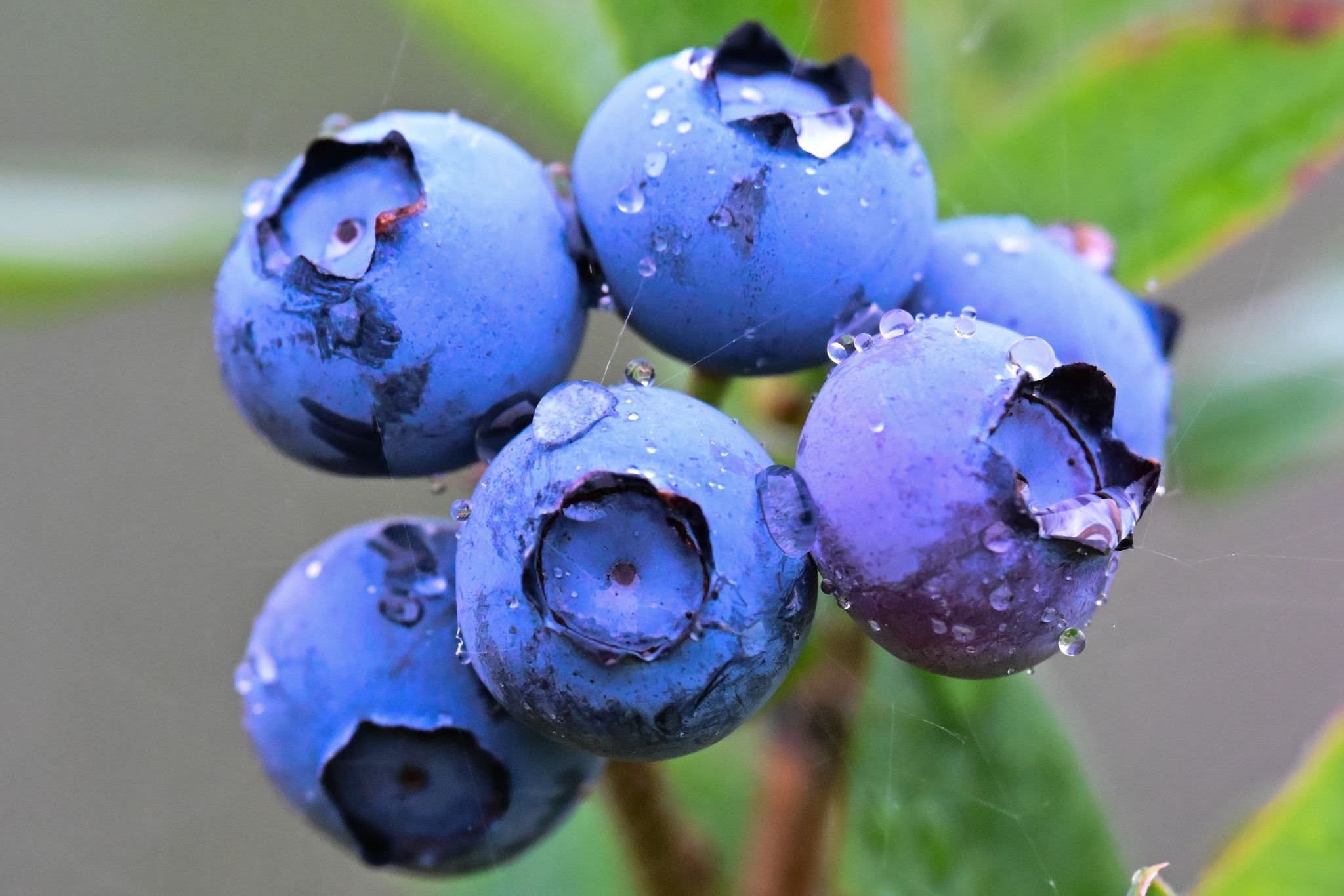
🌿 Bilberry
Heidelbeere
Vaccinium myrtillus L.
The bilberry (Vaccinium myrtillus) is a small, dark blue to almost black berry belonging to the heather family. It is mainly found in forests and heathlands throughout Europe and parts of Asia. The fruits contain anthocyanins, flavonoids, polyphenols, vitamin C, vitamin E and various minerals. Anthocyanins are responsible for the characteristic dark colour and are among the most important antioxidant plant compounds found in bilberries.
Bilberries can be consumed fresh or used dried, as juice or as a powder. They are particularly valuable as part of a varied diet because their polyphenols are associated with antioxidant and vascular-supporting properties. Human studies indicate potentially beneficial effects, particularly on vascular function.
Bilberries can be consumed fresh or used dried, as juice or as a powder. They are particularly valuable as part of a varied diet because their polyphenols are associated with antioxidant and vascular-supporting properties. Human studies indicate potentially beneficial effects, particularly on vascular function.
Notes
Bilberries are rich in anthocyanins and other polyphenols with antioxidant properties. Studies indicate potential beneficial effects on vascular function, blood lipids, blood pressure and blood glucose. Effects on atherosclerosis have mainly been investigated in animal studies and are not yet conclusively established in humans.
Effects
- nutrient-rich
- vascular-supporting
- anti-inflammatory
- supportive of healthy blood glucose
- lipid-regulating
- supportive of healthy blood pressure
- antioxidant
Conditions
- oxidative stress
- cancer prevention
- cardiovascular system
- vascular weakness
- elevated blood glucose
- elevated blood lipids
- circulatory disorders
- type 2 diabetes
- high blood pressure
Application Areas
- cells
- metabolism
- cancer prevention
- cardiovascular system
- lipid metabolism
- blood vessels
- blood glucose regulation
Plant Parts
- berries
Preparations
- raw
- powder
- dried
- freshly pressed juice
Contraindications
- allergy