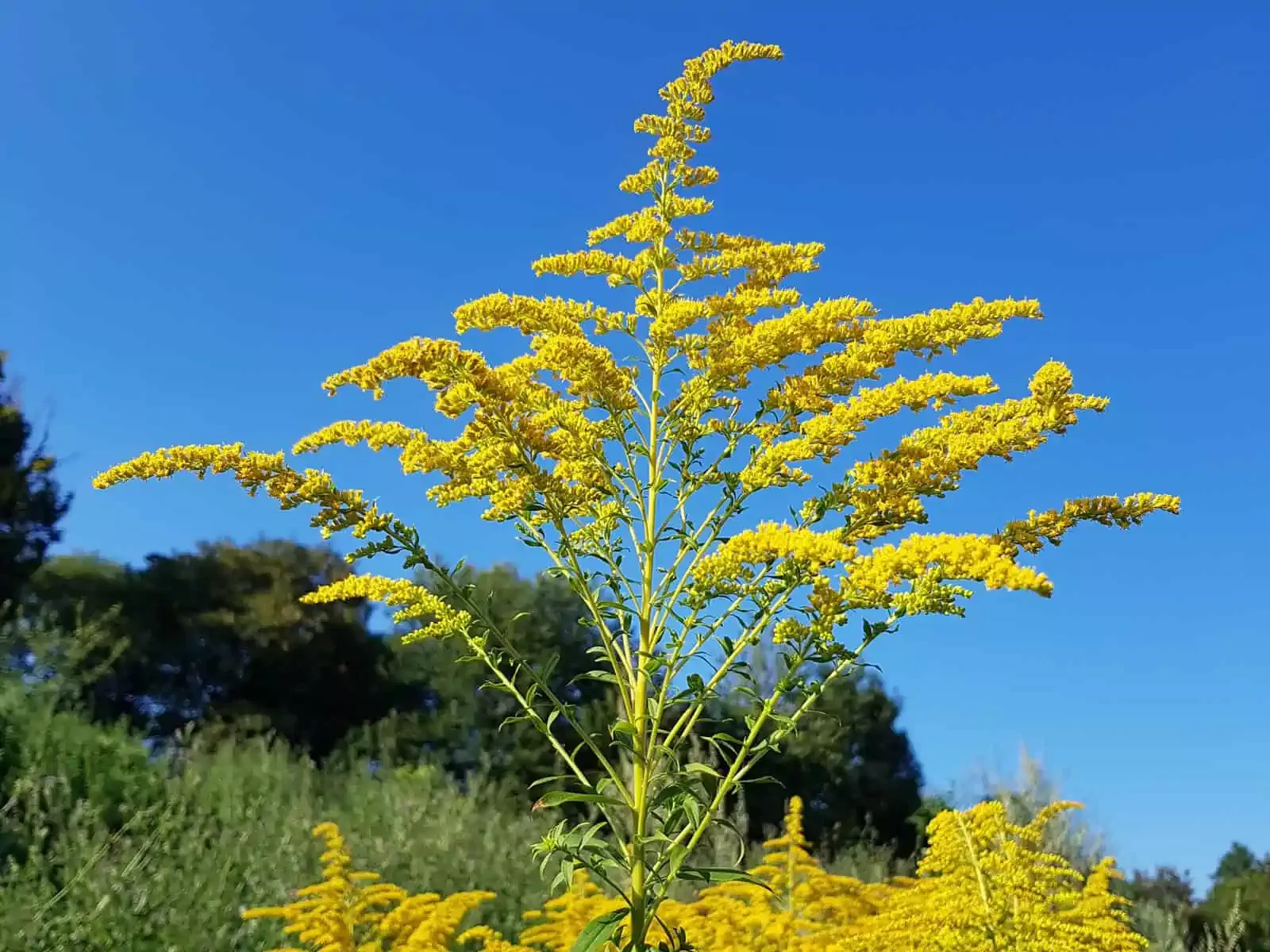
🌿 Goldenrod
Goldrute
Solidago virgaurea L.
Goldenrod is a traditional European medicinal plant primarily used to support the urinary tract and kidney function. The flowering herb is mainly used medicinally. Goldenrod contains flavonoids, phenolic glycosides, saponins, triterpenes and essential oils. These constituents are associated with diuretic, anti-inflammatory, antioxidant and antispasmodic properties.
Traditionally, goldenrod is mainly used to increase urinary flow and flush the urinary tract in minor urinary complaints. The increased urine production may help mechanically flush the urinary tract. The European Medicines Agency recognises goldenrod herb as a traditional herbal medicinal product for urinary tract flushing, particularly in minor complaints.
Goldenrod is also traditionally used for bladder complaints, to support renal elimination and for mild spasmodic urinary discomfort.
Traditionally, goldenrod is mainly used to increase urinary flow and flush the urinary tract in minor urinary complaints. The increased urine production may help mechanically flush the urinary tract. The European Medicines Agency recognises goldenrod herb as a traditional herbal medicinal product for urinary tract flushing, particularly in minor complaints.
Goldenrod is also traditionally used for bladder complaints, to support renal elimination and for mild spasmodic urinary discomfort.
Notes
Goldenrod is particularly useful as a traditional urinary tract flushing herb. It is traditionally used for minor urinary complaints and to support adequate urine production.
Because of its diuretic effect, sufficient fluid intake is important. Goldenrod should therefore not be used without medical advice when fluid intake is restricted, for example in certain severe heart or kidney disorders.
Fever, blood in the urine, severe pain, renal colic or significant urinary symptoms require medical assessment to rule out infection, stones or other underlying conditions.
Because of its diuretic effect, sufficient fluid intake is important. Goldenrod should therefore not be used without medical advice when fluid intake is restricted, for example in certain severe heart or kidney disorders.
Fever, blood in the urine, severe pain, renal colic or significant urinary symptoms require medical assessment to rule out infection, stones or other underlying conditions.
Effects
- kidney-supportive
- antispasmodic
- urinary tract-supportive
- diuretic
- anti-inflammatory
- antioxidant
Conditions
- irritable bladder
- renal gravel
- kidney and bladder stones
- urinary tract complaints
- inflammatory processes
- type 2 diabetes
- bladder complaints
Application Areas
- kidneys
- urinary tract
- urinary system
Plant Parts
- stems
- florets
- flower
- leaf
Preparations
- tincture
- tea
- powder
- dried
- extract
- infusion
Contraindications
- severe heart disease requiring fluid restriction
- severe kidney disease
- painful urination
- urinary complaints accompanied by fever, blood in the urine or severe pain
- blood in the urine
- allergy or hypersensitivity to Asteraceae