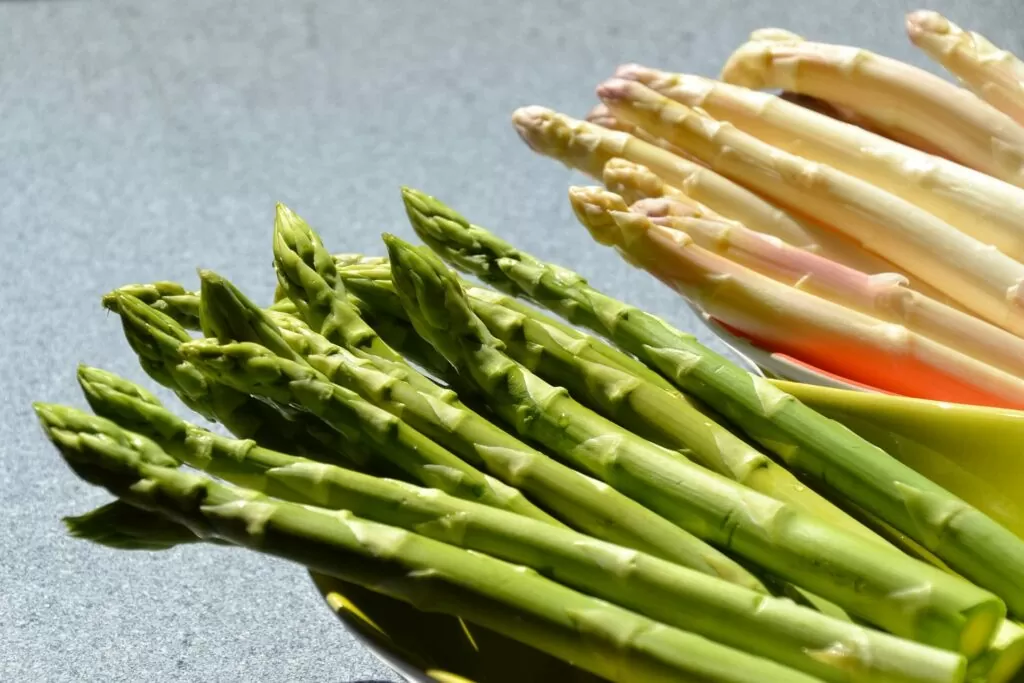
🌿 Garden Asparagus
Gemüsespargel
Asparagus officinalis L.
Garden Asparagus (Asparagus officinalis L.) is a perennial plant belonging to the asparagus family (Asparagaceae). Originally native to Europe and western Asia, it is now cultivated worldwide as a vegetable.
The young, unbranched shoots are eaten as white or green asparagus. They contain dietary fibre, vitamins, minerals and the amino acid asparagine.
In traditional herbal medicine, the roots and seeds are also used alongside the shoots. Asparagus has traditionally been associated with diuretic properties and digestive support.
Historical herbal sources additionally mention its use for poor appetite, constipation and various urinary complaints.
Notes
Young asparagus shoots are usually eaten boiled or steamed. Green asparagus may also be eaten raw when prepared hygienically.
The roots and seeds are mainly associated with traditional herbal medicine and should not be regarded as equivalent to the commonly eaten asparagus spears.
Asparagus contains purines and may cause a characteristic change in urine odour. This is generally harmless.
People with severe kidney disease, medically prescribed fluid restrictions or significant oedema should seek medical advice before using asparagus medicinally.
A known asparagus allergy is a contraindication. Normal dietary consumption should be distinguished from concentrated medicinal preparations.
Effects
- tonic
- diaphoretic
- antispasmodic
- diuretic
- blood-purifying
- calming
- antibacterial
Conditions
- oedema
- constipation
- convalescence
- kidney weakness
- vomiting
- diabetes
- loss of appetite
Application Areas
- digestion
- metabolism
- urinary tract
Plant Parts
- Shoots
- root
- seeds
Preparations
- raw
- cooked
- steamed
Contraindications
- severe kidney disease
- severe heart disease requiring fluid restriction
- kidney disease
- allergy