🌿 Oak
Eiche
Quercus robur / Quercus petraea
Oak is one of the most important tannin-rich plants in European herbal medicine. The bark of young branches is particularly rich in tannins, which have a strongly astringent effect. This can help tighten tissue surfaces, reduce secretions and soothe irritated mucous membranes and inflamed skin. Oak bark has therefore traditionally been used especially for mild diarrhoea, inflammation of the mouth and throat, skin inflammation, minor superficial wounds and haemorrhoids. These traditional uses are also recognised by the European Medicines Agency (EMA). (European Medicines Agency (EMA))
Notes
The bark is the main medicinally used plant part. It is primarily used externally as a decoction for compresses, washes or baths and as a mouth and throat rinse. Internally, a decoction may traditionally be used for mild diarrhoea. The effects are mainly attributed to its tannins.
For haemorrhoids, oak bark is traditionally used externally, particularly to relieve itching and burning. The EMA specifically recognises this traditional use after serious conditions have been excluded by a doctor. (European Medicines Agency (EMA))
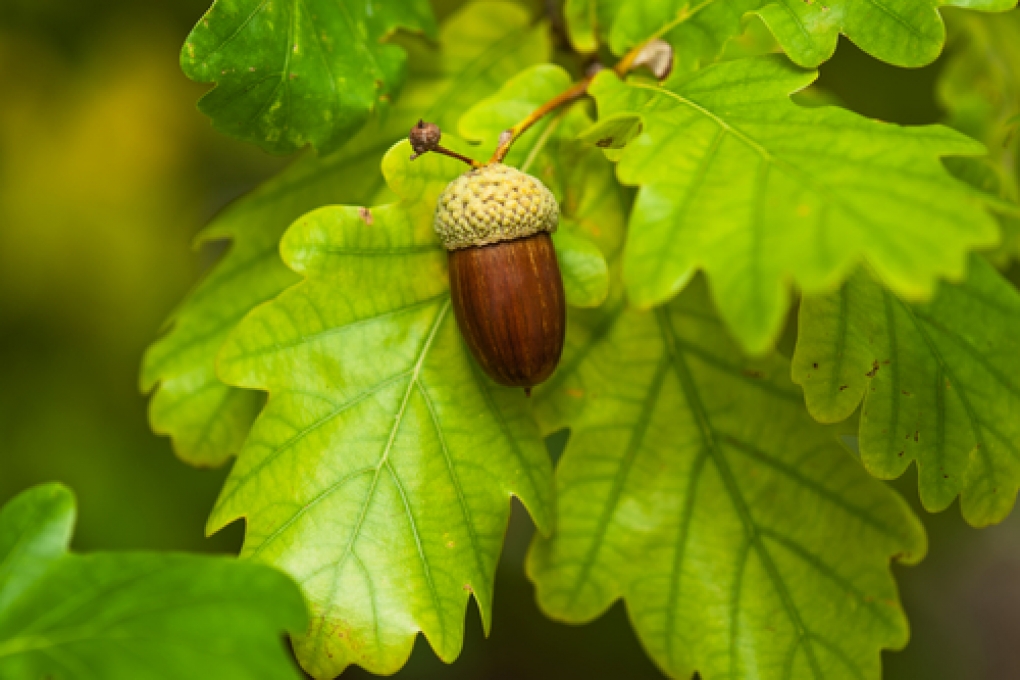
Acorns are not a typical medicinal preparation of oak, but they can be used as food. They contain considerable amounts of tannins and bitter compounds and therefore need thorough soaking or leaching before consumption. They can then be dried and ground into flour or roasted and ground as a coffee substitute.
Acorns also contain starch, fat, protein and minerals and historically served as an important supplementary food, particularly during times of food shortage.
Leaves and flowers are much less important in classical herbal medicine than the bark. Oak flowers are also used as Oak in Bach flower therapy; this belongs to the traditional Bach flower system rather than evidence-based phytotherapy.
For haemorrhoids, oak bark is traditionally used externally, particularly to relieve itching and burning. The EMA specifically recognises this traditional use after serious conditions have been excluded by a doctor. (European Medicines Agency (EMA))
Acorns are not a typical medicinal preparation of oak, but they can be used as food. They contain considerable amounts of tannins and bitter compounds and therefore need thorough soaking or leaching before consumption. They can then be dried and ground into flour or roasted and ground as a coffee substitute.
Acorns also contain starch, fat, protein and minerals and historically served as an important supplementary food, particularly during times of food shortage.
Leaves and flowers are much less important in classical herbal medicine than the bark. Oak flowers are also used as Oak in Bach flower therapy; this belongs to the traditional Bach flower system rather than evidence-based phytotherapy.
Effects
- tissue-tightening for superficial skin injuries
- soothing to mucous membranes
- soothing
- tannin-rich
- supportive of healthy blood glucose
- haemostatic
- antioxidant
- antibacterial
Conditions
- gingivitis
- poorly healing wounds
- mild diarrhoea
- minor burns
- varicose veins
- haemorrhoids
- sore throat
- athlete's foot
- boils
Application Areas
- wound care
- mucous membranes
- mouth and throat
- haemorrhoidal area
- feet
- digestive system
- blood vessels
Plant Parts
- bark
- acorns
- flower
- leaf
Preparations
- compress
- tincture
- tea
- sitz bath
- mouth and throat rinse
- acorn flour
- acorn coffee
- decoction
Contraindications
- blood in the stool or severe abdominal pain
- tannins may irritate a sensitive stomach