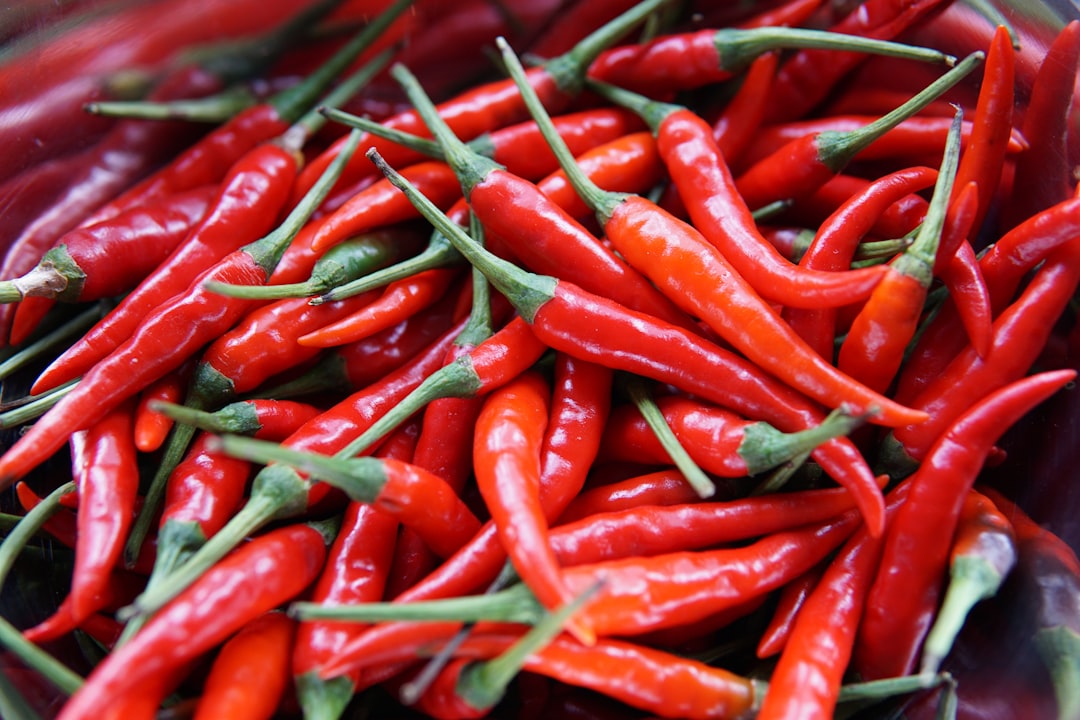
🌿 Chilli Pepper
Chilli
Capsicum annuum / Capsicum frutescens
Chili is a spicy culinary plant and has also traditionally been used as a medicinal plant. Its most important bioactive compound is capsaicin, which is responsible for its heat. Capsaicin has antioxidant, anti-inflammatory, pain-relieving and circulation-promoting properties. Chili has traditionally been used for digestive weakness, circulatory and blood-flow problems, muscle pain and certain skin conditions. Research has also investigated its possible effects on cardiovascular health, blood lipids, weight management, chronic inflammation and cancer.
Notes
Capsaicin can be taken internally as part of the diet or applied externally, for example in creams, ointments or patches. When applied topically, it initially produces a warming or burning sensation and can thereby influence the perception of pain.
Cardiovascular health and cholesterol: Research, particularly experimental studies, suggests that capsaicin may influence lipid metabolism, promote cholesterol excretion and potentially reduce LDL cholesterol. Possible improvements in blood flow and reductions in cholesterol deposits have also been investigated.
Weight management: Capsaicin can temporarily increase energy expenditure and heat production. Studies have also indicated a possible reduction in appetite and cravings for particularly fatty, salty or sweet foods. However, this effect is not a substitute for an overall balanced diet.
Cancer research: Capsaicin is being extensively investigated for possible anticancer properties. Laboratory studies have shown that it can trigger processes leading to programmed cell death (apoptosis) in certain cancer cells. The research described in the source includes lung and pancreatic cancer cells. However, these findings are mainly based on cell and experimental studies and do not mean that chili can treat or cure an existing cancer.
Cardiovascular health and cholesterol: Research, particularly experimental studies, suggests that capsaicin may influence lipid metabolism, promote cholesterol excretion and potentially reduce LDL cholesterol. Possible improvements in blood flow and reductions in cholesterol deposits have also been investigated.
Weight management: Capsaicin can temporarily increase energy expenditure and heat production. Studies have also indicated a possible reduction in appetite and cravings for particularly fatty, salty or sweet foods. However, this effect is not a substitute for an overall balanced diet.
Cancer research: Capsaicin is being extensively investigated for possible anticancer properties. Laboratory studies have shown that it can trigger processes leading to programmed cell death (apoptosis) in certain cancer cells. The research described in the source includes lung and pancreatic cancer cells. However, these findings are mainly based on cell and experimental studies and do not mean that chili can treat or cure an existing cancer.
Effects
- pain-relieving
- anti-inflammatory
- circulation-promoting
- antioxidant
Conditions
- muscular pain
- postherpetic neuralgia
- neuropathic pain
- nerve pain
- joint complaints
Application Areas
- digestion
- metabolism
- nervous system
- muscles
- cardiovascular system
- joints
- blood vessels
Plant Parts
- pot
- seeds
- fruit
Preparations
- capsaicin patch
- topical cream
- tincture
- raw
- powder
- dried
- ground
Contraindications
- topical capsaicin can initially cause intense burning and skin irritation
- avoid contact with mucous membranes and the eyes
- allergy