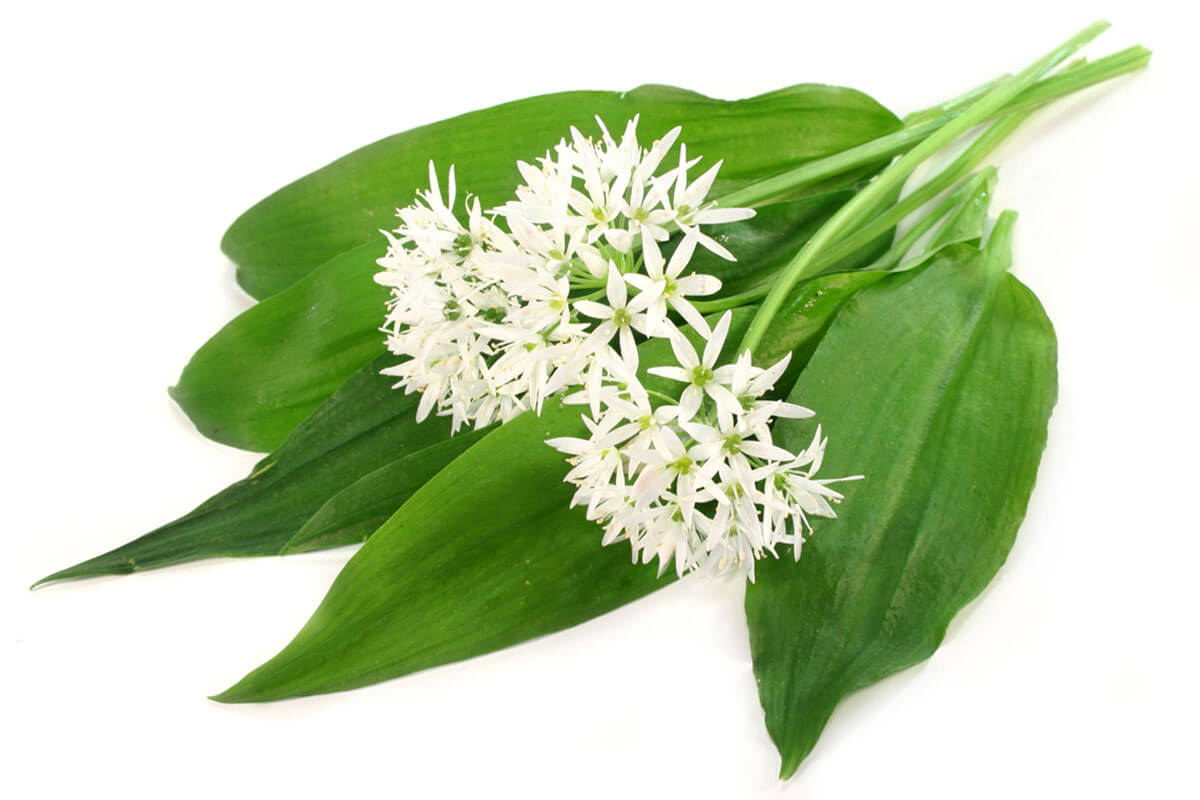
🌿 Wild Garlic
Bärlauch
Allium ursinum L.
Wild garlic, also known as ramsons, is a European wild and medicinal plant closely related to garlic, onion and chives. The whole plant has a characteristic garlic-like smell. The fresh leaves are particularly popular as food and have traditionally been used medicinally.
Wild garlic contains sulphur compounds such as alliin and the thiosulfinates formed from it, as well as flavonoids, phenolic acids, saponins and other bioactive plant constituents. When the leaves are crushed, sulphur compounds are enzymatically transformed. Research describes antioxidant, antimicrobial, anti-inflammatory and cardioprotective properties.
Traditionally, wild garlic has mainly been used to support digestion, metabolism and the cardiovascular system. Because of its sulphur-containing compounds, it has also traditionally been used to support elimination and in spring cleansing preparations.
Wild garlic contains sulphur compounds such as alliin and the thiosulfinates formed from it, as well as flavonoids, phenolic acids, saponins and other bioactive plant constituents. When the leaves are crushed, sulphur compounds are enzymatically transformed. Research describes antioxidant, antimicrobial, anti-inflammatory and cardioprotective properties.
Traditionally, wild garlic has mainly been used to support digestion, metabolism and the cardiovascular system. Because of its sulphur-containing compounds, it has also traditionally been used to support elimination and in spring cleansing preparations.
Notes
Wild garlic is generally well suited as a food when consumed in normal culinary amounts. The fresh leaves can be used in salads, herb butter, pesto, soups and other dishes. Heat may alter some sensitive constituents; therefore, fresh crushed leaves are particularly relevant when considering the plant's characteristic sulphur chemistry.
Scientific research on Allium ursinum indicates interesting antioxidant, antimicrobial and anti-inflammatory properties.
When harvesting wild garlic, the risk of confusing it with poisonous plants is particularly important. It can be mistaken for autumn crocus (Colchicum autumnale) and lily of the valley (Convallaria majalis). Only plants that have been identified with certainty should be collected and consumed.
Scientific research on Allium ursinum indicates interesting antioxidant, antimicrobial and anti-inflammatory properties.
When harvesting wild garlic, the risk of confusing it with poisonous plants is particularly important. It can be mistaken for autumn crocus (Colchicum autumnale) and lily of the valley (Convallaria majalis). Only plants that have been identified with certainty should be collected and consumed.
Effects
- digestive
- immunomodulatory
- vascular-supporting
- cholesterol-lowering
- lipid-regulating
- supportive of healthy blood pressure
- antioxidant
- antifungal
- antimicrobial
- antibacterial
Conditions
- cellular protection
- digestive complaints
- metabolic disorders
- fungal infections
- cardiovascular system
- elevated cholesterol levels
- elevated blood lipids
- inflammatory processes
- circulatory disorders
- type 2 diabetes
- intestinal health
- high blood pressure
- bloating
- bacterial infections
- atherosclerotic processes
- loss of appetite
Application Areas
- cells
- digestion
- metabolism
- liver and natural detoxification processes
- immune system
- cardiovascular system
- digestive system
- blood vessels
Plant Parts
- bulb
- seeds
- aerial parts
- flower
- leaf
Preparations
- tincture
- tea
- powder
- dried
- freshly pressed juice
- extract
- decoction
Contraindications
- gastrointestinal sensitivity
- allergy