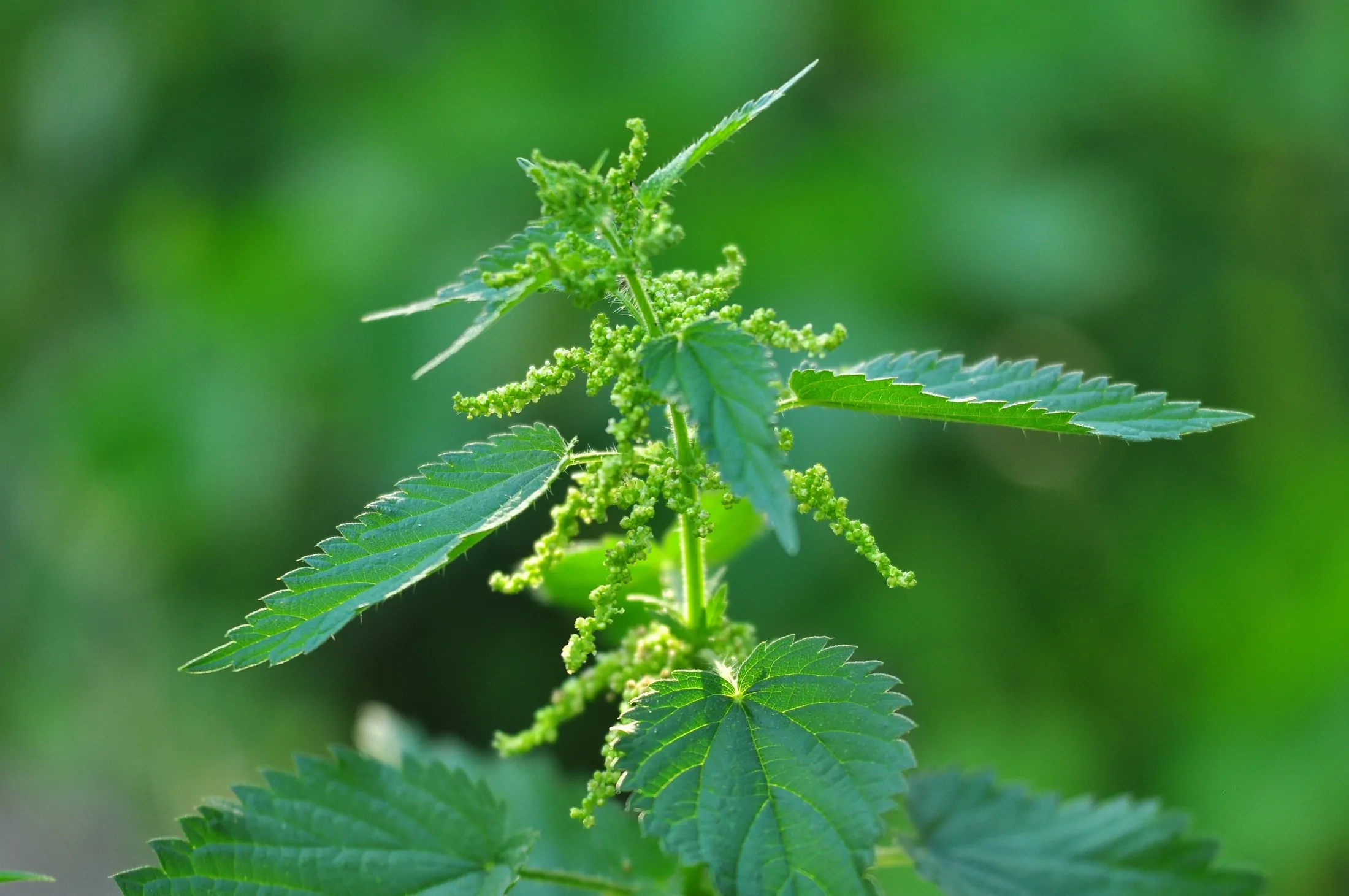
🌿 Stinging Nettle
Brennnessel
Urtica dioica
Stinging nettle is a versatile medicinal and food plant. Its leaves and young shoots are rich in minerals, vitamins and various plant compounds. It is traditionally used particularly to support the urinary tract, promote urine excretion and for minor joint and rheumatic complaints. The seeds are traditionally used for fatigue and reduced vitality, while the root has a specific application for lower urinary tract symptoms associated with benign prostatic hyperplasia (BPH).
Notes
Leaves and young shoots can be used as a wild vegetable after sufficient heating. Dried nettle is traditionally prepared as tea or infusion. Other traditional preparations include fresh juice, powder, tincture, baths and hair rinses.
The seeds are traditionally used as a strengthening food, particularly in cases of fatigue and reduced vitality.
Nettle root is specifically used for lower urinary tract symptoms associated with benign prostatic hyperplasia (BPH). These include frequent urination, difficulty urinating, a weak urinary stream and incomplete bladder emptying.
The seeds are traditionally used as a strengthening food, particularly in cases of fatigue and reduced vitality.
Nettle root is specifically used for lower urinary tract symptoms associated with benign prostatic hyperplasia (BPH). These include frequent urination, difficulty urinating, a weak urinary stream and incomplete bladder emptying.
Effects
- pain-relieving
- nutrient-rich
- strengthening
- diuretic
- antioxidant
Conditions
- fatigue
- rheumatic complaints
- prostate complaints
- skin problems
- urinary tract complaints
- lower urinary tract symptoms
Application Areas
- prostate
- nervous system
- skin
- urinary tract
- joints
Plant Parts
- root
- seeds
- herb
- young stems
- leaf
Preparations
- tincture
- tea
- freshly pressed juice
- infusion
Contraindications
- oedema caused by impaired heart or kidney function
- urinary complaints accompanied by fever, blood in the urine or severe pain
- serious causes should be excluded by a doctor before use for prostate-related complaints
- allergy