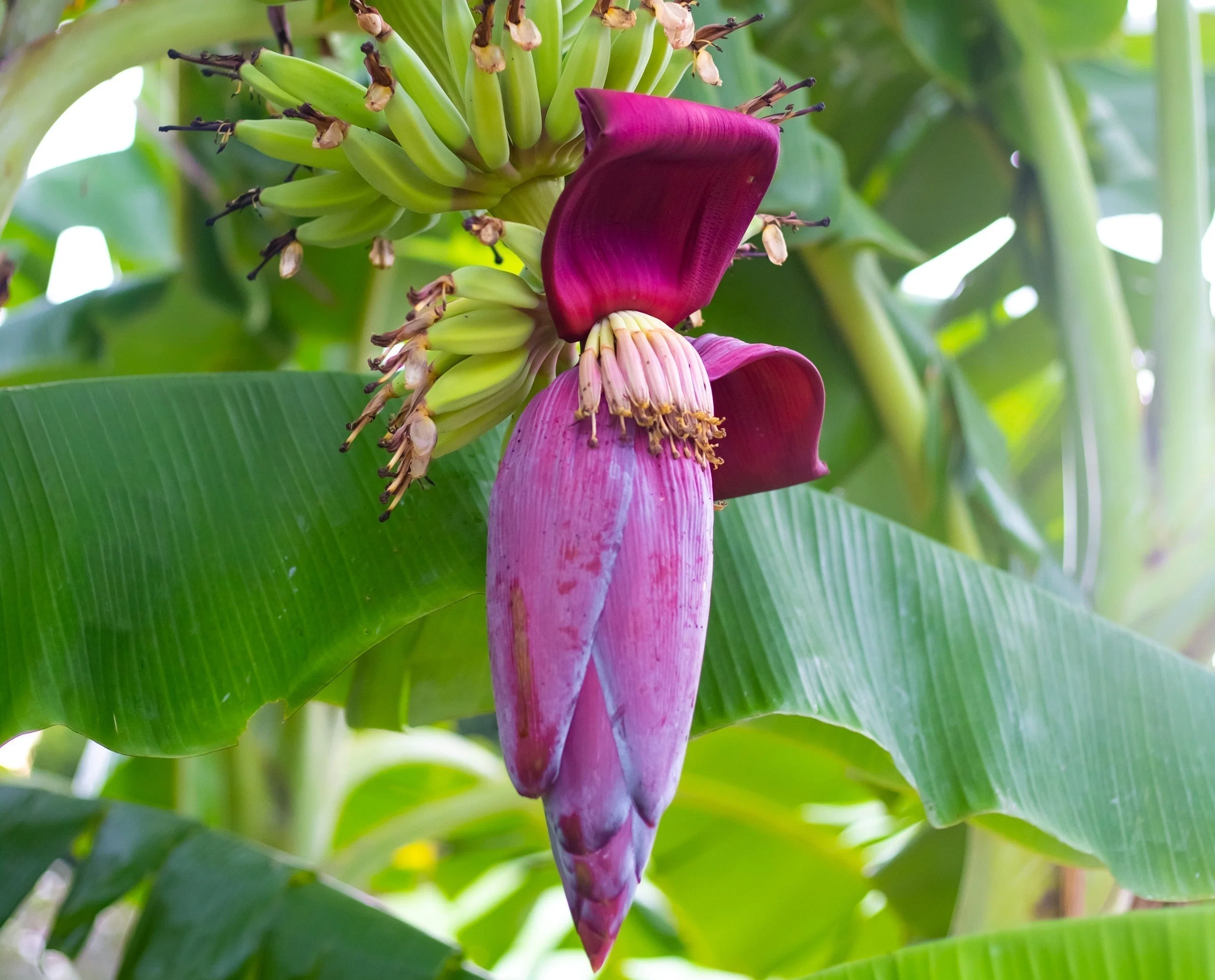
🌿 Banana Blossom
Bananenblüte
Musa acuminata
Banana blossom, also known as banana flower or banana heart, is the large purple-red inflorescence that develops at the end of a banana fruit cluster. It is traditionally consumed as a vegetable and used medicinally in many parts of South and Southeast Asia, as well as in parts of Africa and South America. The flowers and fleshy bracts can be cooked, steamed, fried or incorporated into salads and curries.
Banana blossom is rich in dietary fibre and contains protein and minerals including potassium, calcium, magnesium and iron, together with various bioactive plant compounds. Studies have also identified flavonoids, phenolic compounds and other substances with antioxidant activity.
Traditionally, banana blossom has been used for digestive complaints, constipation, cough and inflammatory conditions. Its potential effects on blood glucose and lipid metabolism are particularly interesting. Research has reported antioxidant, anti-inflammatory, antimicrobial, glucose-regulating and lipid-regulating properties. However, much of the evidence comes from laboratory and animal studies, and clinical evidence in humans remains limited.
Banana blossom is rich in dietary fibre and contains protein and minerals including potassium, calcium, magnesium and iron, together with various bioactive plant compounds. Studies have also identified flavonoids, phenolic compounds and other substances with antioxidant activity.
Traditionally, banana blossom has been used for digestive complaints, constipation, cough and inflammatory conditions. Its potential effects on blood glucose and lipid metabolism are particularly interesting. Research has reported antioxidant, anti-inflammatory, antimicrobial, glucose-regulating and lipid-regulating properties. However, much of the evidence comes from laboratory and animal studies, and clinical evidence in humans remains limited.
Notes
Banana blossom is a nutrient-rich food and can be prepared in a similar way to other vegetables. Its high dietary fibre content is particularly noteworthy. Nutritional composition can vary considerably depending on the Musa species, cultivar, maturity and growing conditions.
The effects frequently described in traditional sources concerning blood glucose, cholesterol, blood pressure, inflammation and antioxidant protection are scientifically interesting but should not be equated with proven treatment of these conditions. For the database, these properties should therefore be described as supportive rather than curative.
Caution may be appropriate with concentrated extracts in people with diabetes or those taking blood-glucose-lowering medication, as an additional glucose-lowering effect is theoretically possible. No comparable concern applies to normal culinary consumption of banana blossom.
The effects frequently described in traditional sources concerning blood glucose, cholesterol, blood pressure, inflammation and antioxidant protection are scientifically interesting but should not be equated with proven treatment of these conditions. For the database, these properties should therefore be described as supportive rather than curative.
Caution may be appropriate with concentrated extracts in people with diabetes or those taking blood-glucose-lowering medication, as an additional glucose-lowering effect is theoretically possible. No comparable concern applies to normal culinary consumption of banana blossom.
Effects
- digestive
- anti-inflammatory
- supportive of healthy blood glucose
- lipid-regulating
- rich in dietary fibre
- antioxidant
- antimicrobial
Conditions
- constipation
- digestive complaints
- oxidative stress
- cardiovascular system
- elevated cholesterol levels
- elevated blood glucose
- inflammatory processes
Application Areas
- cells
- digestion
- metabolism
- cardiovascular system
- digestive system
- blood glucose regulation
Plant Parts
- bracts
- florets
- flower
Preparations
- tea
- raw
- powder
- dried
- cooked
- steamed
- extract
- infusion
Contraindications
- concurrent use of blood-glucose-lowering medication
- tendency towards hypoglycaemia
- breastfeeding
- pregnancy