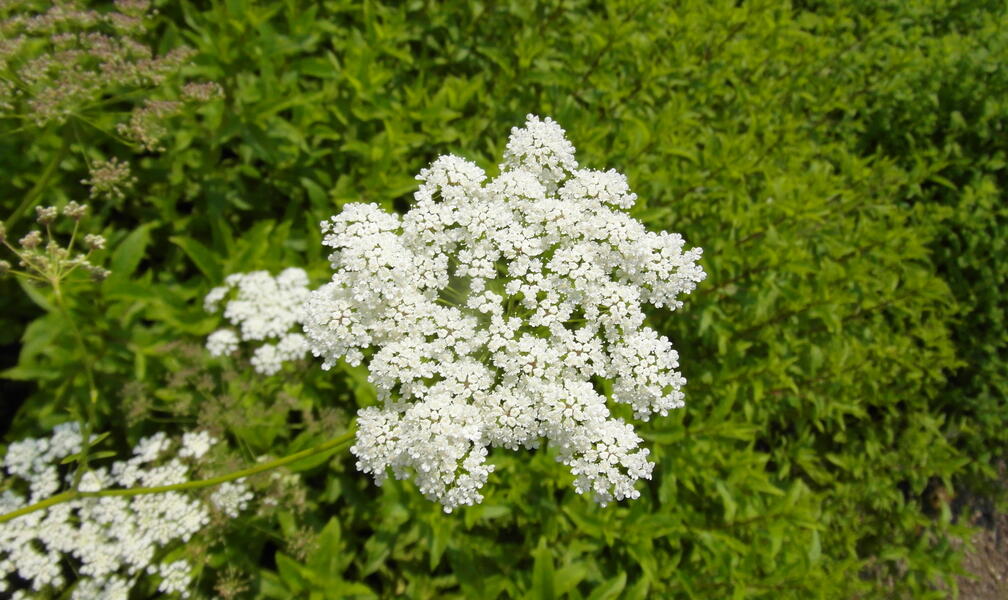
🌿 Anise
Anis
Pimpinella anisum L.
Anise is an aromatic annual herb belonging to the Apiaceae family. The dried fruits, commonly called anise seeds, are the main medicinal part of the plant. They contain essential oil, with trans-anethole as its principal constituent. Traditionally, anise is used mainly for digestive complaints, flatulence and mild spasmodic gastrointestinal discomfort. The European Medicines Agency recognises aniseed as a traditional herbal medicinal product for the relief of mild spasmodic gastrointestinal complaints including bloating and flatulence.
Traditionally, anise has also been used for coughs and congested airways, loss of appetite, menstrual complaints and to support milk production. Research has reported antioxidant, antimicrobial, antifungal, antispasmodic, expectorant and anti-inflammatory properties.
Traditionally, anise has also been used for coughs and congested airways, loss of appetite, menstrual complaints and to support milk production. Research has reported antioxidant, antimicrobial, antifungal, antispasmodic, expectorant and anti-inflammatory properties.
Notes
Anise is generally suitable as a culinary spice when consumed in normal food quantities. For medicinal use, the dried fruits are commonly prepared as tea or other preparations. Essential oil is considerably more concentrated and should not be considered equivalent to ordinary consumption of the whole fruit.
Anise should also be clearly distinguished from star anise (Illicium verum). Although both are commonly called “anise”, they belong to different plant families and are botanically unrelated.
Anise should also be clearly distinguished from star anise (Illicium verum). Although both are commonly called “anise”, they belong to different plant families and are botanically unrelated.
Effects
- digestive
- pain-relieving
- expectorant
- galactagogue
- antispasmodic
- diuretic
- anti-inflammatory
- antioxidant
- antimicrobial
- antibacterial
Conditions
- menopausal complaints
- feeling of fullness
- digestive complaints
- menstrual complaints
- stomach complaints
- cough
- intestinal health
- chronic bronchitis
- bronchial complaints
- bloating
- loss of appetite
Application Areas
- female reproductive system
- digestion
- metabolism
- gastrointestinal system
- bronchi
- respiratory system
Plant Parts
- essential oil
- seeds
- fruit
Preparations
- essential oil
- tincture
- tea
- raw
- powder
- extract
- infusion
Contraindications
- breastfeeding
- pregnancy
- children under 6
- allergy or hypersensitivity to Apiaceae
- allergy