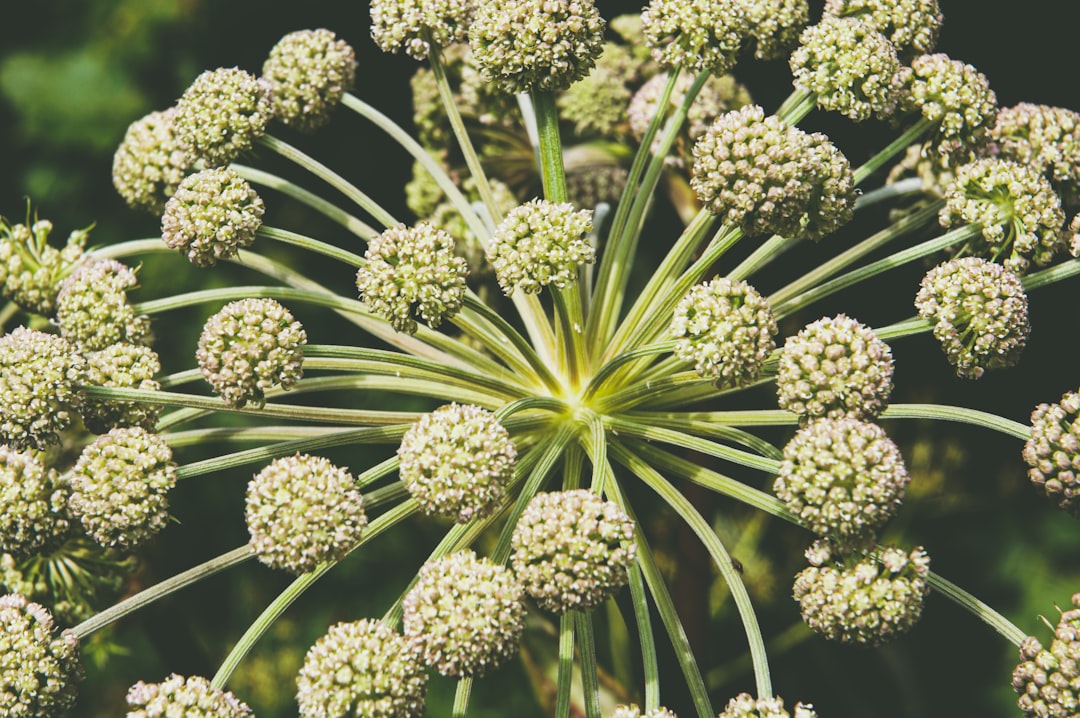
🌿 Angelica
Angelika
Angelica archangelica L.
Angelica, also known as Garden Angelica, is a large, aromatic biennial medicinal plant traditionally used mainly for digestive complaints. Its root contains essential oils and bitter compounds that stimulate salivary, gastric and biliary secretions and may therefore support digestion. Traditionally, Angelica has been used for loss of appetite, bloating, flatulence, abdominal cramps and digestive weakness.
Angelica has also traditionally been used for cold symptoms, exhaustion, menstrual complaints, migraine and rheumatic conditions. Modern phytochemical research identifies essential oils and various coumarin compounds as important bioactive constituents. Several pharmacological effects have been investigated in preclinical studies, although high-quality clinical evidence for many applications remains limited.
Angelica has also traditionally been used for cold symptoms, exhaustion, menstrual complaints, migraine and rheumatic conditions. Modern phytochemical research identifies essential oils and various coumarin compounds as important bioactive constituents. Several pharmacological effects have been investigated in preclinical studies, although high-quality clinical evidence for many applications remains limited.
Notes
Angelica should not be confused with other species of the genus Angelica. When collected in the wild, there is a particular risk of confusing it with highly poisonous Apiaceae such as water hemlock. Correct botanical identification is therefore essential.
The plant contains furanocoumarins such as bergapten, angelicin, imperatorin and xanthotoxin. These compounds can increase photosensitivity and may promote phototoxic skin reactions in susceptible individuals. Strong UV exposure should therefore be avoided when using Angelica medicinally.
Angelica should not be used during pregnancy. Traditional medicinal use is generally limited in duration, and higher doses or prolonged use should be professionally supervised.
The plant contains furanocoumarins such as bergapten, angelicin, imperatorin and xanthotoxin. These compounds can increase photosensitivity and may promote phototoxic skin reactions in susceptible individuals. Strong UV exposure should therefore be avoided when using Angelica medicinally.
Angelica should not be used during pregnancy. Traditional medicinal use is generally limited in duration, and higher doses or prolonged use should be professionally supervised.
Effects
- digestive
- gastric secretion-stimulating
- strengthening
- antispasmodic
- carminative
- immunomodulatory
- choleretic
- anti-inflammatory
- calming
- appetite-stimulating
- antiseptic
- antioxidant
- antimicrobial
Conditions
- menopausal complaints
- constipation
- digestive complaints
- rheumatic complaints
- migraine
- menstrual complaints
- stomach complaints
- gout
- fatigue
- common cold
- bloating
- loss of appetite
Application Areas
- female reproductive system
- digestion
- metabolism
- nervous system
- gastrointestinal system
- liver and natural detoxification processes
- cardiovascular system
- skin
- biliary system
- gallbladder
- respiratory system
Plant Parts
- root
- seeds
- leaf
Preparations
- tincture
- tea
- powder
- extract
- infusion
- decoction
Contraindications
- pregnancy
- intense UV or sun exposure
- increased photosensitivity
- allergy or hypersensitivity to Apiaceae