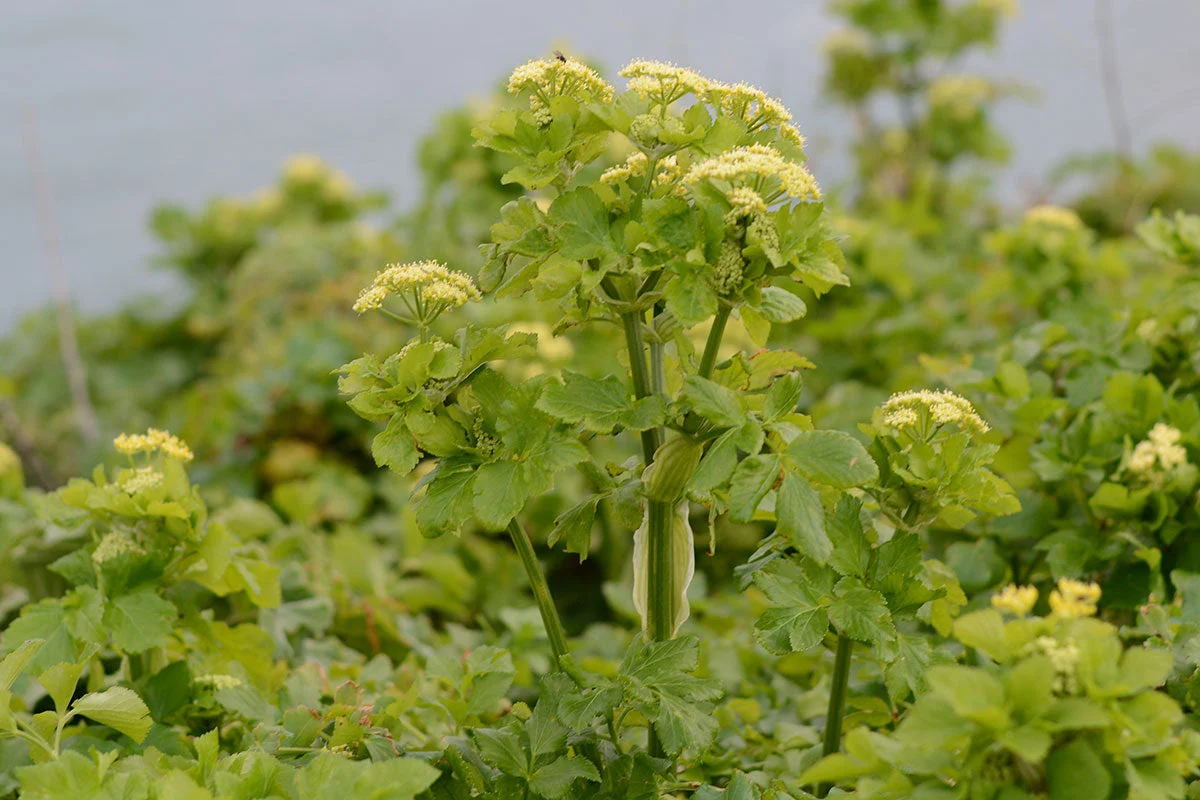
🌿 Alexanders
Alexanders
Smyrnium olusatrum L.
Alexanders, also known as horse parsley or black lovage, is a traditional medicinal and food plant belonging to the Apiaceae family. It was formerly used as a vegetable and spice and has also been used in traditional herbal medicine, particularly for digestive and urinary complaints.
Constituents:
Essential oil
Isofuranodiene
Furanosesquiterpenes
Flavonoids
Bitter compounds
Angelic acid
Minerals
Potassium
Magnesium
Iron
Zinc
Vitamin B1
Vitamin B2
Vitamin B12
Constituents:
Essential oil
Isofuranodiene
Furanosesquiterpenes
Flavonoids
Bitter compounds
Angelic acid
Minerals
Potassium
Magnesium
Iron
Zinc
Vitamin B1
Vitamin B2
Vitamin B12
Notes
Alexanders has traditionally been used as a medicinal plant for digestive complaints, bloating, urinary tract complaints, menstrual complaints and respiratory complaints. The root has traditionally been regarded as having diuretic properties. Externally, the plant has been used traditionally for minor skin injuries, swellings, itching and rheumatic complaints.
The plant contains essential oil and various bioactive constituents, including isofuranodiene and other furanosesquiterpenes. Experimental studies have demonstrated antioxidant, antimicrobial, anti-inflammatory and hepatoprotective properties. Individual constituents have also shown antiproliferative, cytotoxic and apoptosis-inducing effects in cell and animal models. These findings are predominantly based on preclinical research; clinical evidence for therapeutic efficacy in humans remains limited.
The plant contains essential oil and various bioactive constituents, including isofuranodiene and other furanosesquiterpenes. Experimental studies have demonstrated antioxidant, antimicrobial, anti-inflammatory and hepatoprotective properties. Individual constituents have also shown antiproliferative, cytotoxic and apoptosis-inducing effects in cell and animal models. These findings are predominantly based on preclinical research; clinical evidence for therapeutic efficacy in humans remains limited.
Effects
- stimulating
- antiproliferative
- cytotoxic
- digestive
- diaphoretic
- pain-relieving
- hepatoprotective
- antispasmodic
- carminative
- diuretic
- anti-inflammatory
- apoptosis-inducing
- antiseptic
- antioxidant
- antimicrobial
- anti-angiogenic
Conditions
- asthma
- cellular protection
- digestive complaints
- rheumatic complaints
- oxidative stress
- renal gravel
- kidney and bladder stones
- menstrual complaints
- cancer prevention
- itching
- skin problems
- urinary tract complaints
- sore throat
- joint complaints
- inflammatory processes
- bloating
- respiratory complaints
Application Areas
- general wellbeing
- cells
- female reproductive system
- digestion
- kidneys
- gastrointestinal system
- liver and natural detoxification processes
- immune system
- skin
- urinary tract
- joints
- digestive system
- bronchi
- respiratory system
Plant Parts
- leaf
- root
- stems
- seeds
- herb
- young stems
- fruit
- florets
- flower
Preparations
- decoction
- essential oil
- compress
- tea
- raw
- dried
- ground
- cooked
- steamed
- extract
- blanched
- infusion
Contraindications
- allergy or hypersensitivity to Apiaceae
- kidney disease