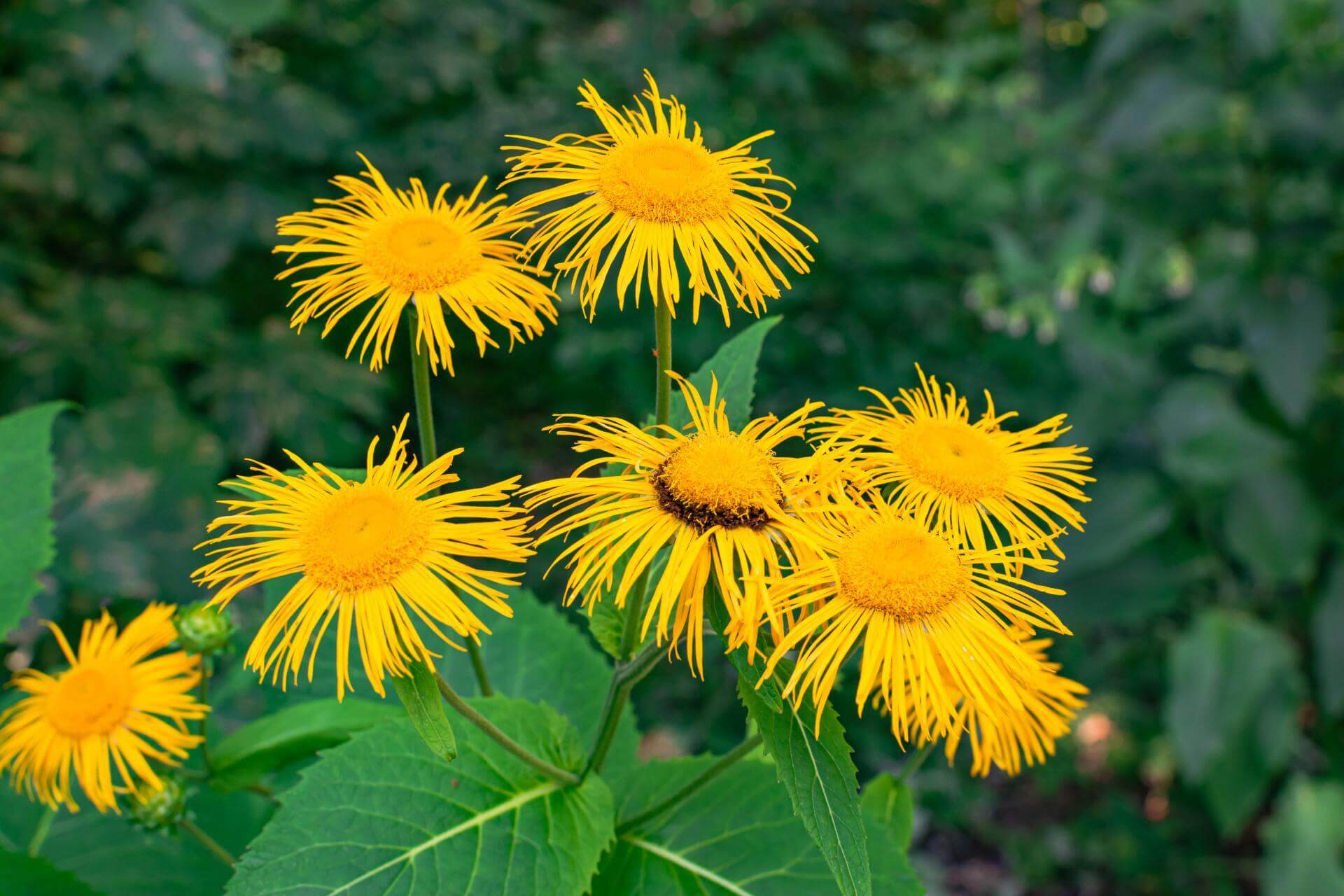
🌿 Elecampane
Alant
Inula helenium
Elecampane is a large perennial medicinal and aromatic plant originally native to Central and Asia Minor and now cultivated in various parts of Europe. It can grow to around two metres in height and produces large yellow flower heads. The plant has been used medicinally since antiquity and was particularly valued in traditional European herbal medicine. The root is the principal medicinal part.
Elecampane has traditionally been used mainly for coughs, respiratory mucus and other respiratory complaints. Its volatile oils are traditionally considered expectorant and mucus-loosening, helping to clear the airways. It has also traditionally been used for digestive problems, flatulence, poor appetite and gallbladder complaints. Externally, the root and fresh leaves have been used for eczema, inflammatory skin conditions, ulcers and poorly healing wounds.
Important constituents include inulin, volatile oil, alantic acid, alant camphor, helenin, sesquiterpene lactones, alantolactone, resins, azulene, pectin, bitter compounds, triterpenes, polyacetylenes and beta-sitosterol. Sesquiterpene lactones and volatile oils are particularly relevant to the plant's traditional respiratory and digestive applications.
Elecampane has traditionally been used mainly for coughs, respiratory mucus and other respiratory complaints. Its volatile oils are traditionally considered expectorant and mucus-loosening, helping to clear the airways. It has also traditionally been used for digestive problems, flatulence, poor appetite and gallbladder complaints. Externally, the root and fresh leaves have been used for eczema, inflammatory skin conditions, ulcers and poorly healing wounds.
Important constituents include inulin, volatile oil, alantic acid, alant camphor, helenin, sesquiterpene lactones, alantolactone, resins, azulene, pectin, bitter compounds, triterpenes, polyacetylenes and beta-sitosterol. Sesquiterpene lactones and volatile oils are particularly relevant to the plant's traditional respiratory and digestive applications.
Notes
Elecampane is traditionally regarded particularly as a respiratory and cough herb. It has been used for common colds, irritating coughs, bronchitis and chronic bronchitis. Historical use also included whooping cough, pneumonia and tuberculosis; such serious conditions must not be treated with elecampane as a substitute for appropriate medical care.
Another traditional area of use is the digestive system. Bitter compounds and inulin are associated with traditional uses for stimulating appetite and digestion. Historically, elecampane was also used for flatulence, digestive weakness and gallbladder complaints. The root's high inulin content has also led to its use in specialised nutritional products.
Externally, elecampane has traditionally been used as a decoction, wash, compress or ointment for eczema, inflammatory skin conditions, ulcers, spots and poorly healing wounds. Fresh leaves were traditionally applied directly to inflamed skin or wounds.
Elecampane can cause allergic reactions. Its sesquiterpene lactones may irritate the skin and mucous membranes. Large amounts may cause vomiting, diarrhoea, cramps and, in severe cases, paralysis.
Another traditional area of use is the digestive system. Bitter compounds and inulin are associated with traditional uses for stimulating appetite and digestion. Historically, elecampane was also used for flatulence, digestive weakness and gallbladder complaints. The root's high inulin content has also led to its use in specialised nutritional products.
Externally, elecampane has traditionally been used as a decoction, wash, compress or ointment for eczema, inflammatory skin conditions, ulcers, spots and poorly healing wounds. Fresh leaves were traditionally applied directly to inflamed skin or wounds.
Elecampane can cause allergic reactions. Its sesquiterpene lactones may irritate the skin and mucous membranes. Large amounts may cause vomiting, diarrhoea, cramps and, in severe cases, paralysis.
Effects
- antibacterial
- antifungal
- antiseptic
- appetite-stimulating
- expectorant
- anti-inflammatory
- choleretic
- diuretic
- immunomodulatory
- antispasmodic
- expectorant
- diaphoretic
- supportive of wound healing
Conditions
- loss of appetite
- asthma
- respiratory complaints
- bloating
- chronic bronchitis
- intestinal health
- diarrhoea
- eczema
- inflammatory processes
- elevated LDL cholesterol
- skin problems
- cough
- itching
- stomach complaints
- menstrual complaints
- poorly healing wounds
- intestinal worms
Application Areas
- respiratory system
- bronchi
- gallbladder
- biliary system
- skin
- liver and natural detoxification processes
- lungs
- kidneys
- metabolism
Plant Parts
- leaf
- root
Preparations
- decoction
- extract
- powder
- raw
- tea
- tincture
- compress
Contraindications
- pregnancy
- breastfeeding
- allergy or hypersensitivity to Asteraceae
- irritated mucous membranes